
Table of Contents
- Why Cruelty-Free Skincare Matters More Than Ever in 2026
- How to Verify Leaping Bunny Certified Skincare and Other Claims
- Clean Beauty Brand Comparisons: What Separates Real Ethical Brands from Greenwashing
- The Best Cruelty-Free Skincare Products for 2026
- Mad Penguin Skincare Reviews: What Customers Actually Say About Ethical Skincare That Works
- Building a Complete Cruelty-Free Skincare Routine for Sensitive Skin
- Conclusion: Making the Switch to Ethical Skincare in 2026
- Frequently Asked Questions
Last Updated: September 13, 2026
Why Cruelty-Free Skincare Matters More Than Ever in 2026
Walk down any beauty aisle and half the labels say "cruelty-free," "clean," or "ethical", none of which are regulated in the United States, so a brand can print them without proving a thing. That's why best cruelty-free skincare for 2026 isn't a shopping question. It's a verification question.
At Mad Penguin Skincare, we built our line around the idea that you shouldn't have to take a label's word for it. Every formula is vegan and cruelty-free, and we publish what's in it. Below, we'll show you how to separate real ethical brands from marketing copy, then walk through the products and routines that deliver.
How to Verify Leaping Bunny Certified Skincare and Other Claims
Leaping Bunny certified skincare is the standard to look for, because it's the only certification requiring an independent audit of a brand's entire supply chain, not just its finished products (leapingbunny.org). Run by the Coalition for Consumer Information on Cosmetics, it requires brands to recommit every year.
Other certifications carry weight too, but they verify different things:
- Leaping Bunny: audits every supplier and ingredient, requires a formal commitment with annual renewal
- PETA's Beauty Without Bunnies: verifies no animal testing, though it relies more on signed agreements than supply-chain audits
- Vegan labels: confirm no animal-derived ingredients, which is a separate question from testing
That distinction trips people up constantly: a product can be vegan and still tested on animals, or cruelty-free while containing beeswax. Two different claims.
Third-Party Certifications That Actually Mean Something
A certification earns its keep when an outside body, not the brand, does the checking. Look for the Leaping Bunny logo on the packaging itself, then cross-check the brand against the official Leaping Bunny certified brand list. If a company claims certification but doesn't appear in the program's own database, that's your answer.
Red Flags: When 'Cruelty-Free' Is Just Marketing
The biggest mistake shoppers make is trusting a bunny icon a brand drew itself. A few patterns worth watching:
- No named certifying body anywhere on the site
- Vague phrasing like "we never test on animals" with no audit trail
- "Cruelty-free" claims that appear only on the marketing page, never on the label
- A parent company that tests on animals in another market, even if the sub-brand doesn't
Clean Beauty Brand Comparisons: What Separates Real Ethical Brands from Greenwashing
The real difference between an ethical brand and a greenwashed one is supply chain transparency. Ethical brands tell you where ingredients come from and who supplies them. Greenwashers use botanical imagery and words like "natural" while disclosing nothing verifiable.
When you compare clean beauty brands, judge them on four things: third-party verification, ingredient disclosure, checkable packaging claims, and published clinical or dermatologist-tested results. A brand that scores well on all four is doing the work; one that scores well on none is selling a feeling.
A Five-Point Verification Scorecard You Can Run in Ten Minutes
Most shoppers compare brands on vibe. Instead, score each brand on five yes-or-no questions:
- Does the brand name its certifying body? "Leaping Bunny certified" is verifiable. "Cruelty-free" alone is not.
- Is the full ingredient list published on the product page, not just the box? If you have to email customer service to see what's in a serum, that's a point against.
- Does the brand disclose its parent company? A cruelty-free sub-brand owned by a parent that tests in other markets is a common pattern worth checking.
- Are packaging claims specific? "Recyclable" means the material is accepted in curbside programs. "Refillable" means the brand sells refills. "Compostable" means it breaks down in a home or industrial compost setting. These are three different promises, and vague use of any of them is a yellow flag.
- Does the brand publish testing data or dermatologist input? A brand that says "dermatologist-tested" without naming the type of testing is using the phrase as decoration.
A brand scoring 4 or 5 is doing real work. A brand scoring 0 or 1 is relying on aesthetics.
Ingredients That Quietly Undermine an Ethical Claim
Even a certified cruelty-free brand can carry ingredients sensitive-skin shoppers want to avoid. The most common:
- Synthetic fragrance and "parfum", an umbrella term that can hide dozens of compounds, and a frequent trigger for reactive skin.
- Sulfates (SLS and SLES), effective cleansers that can strip the skin barrier, especially in daily-use face washes.
- Phthalates, often used to stabilize fragrance; rarely listed by name.
- Formaldehyde-releasing preservatives, look for names like DMDM hydantoin and diazolidinyl urea (the FDA).
- PEG compounds, not inherently harmful, but their supply chain is harder to verify, which matters if your priority is full traceability.
This is the layer most brand-comparison guides skip: a brand can pass the cruelty-free test and still fail the sensitive-skin test. The two questions are separate.
Where Mad Penguin Skincare Fits the Scorecard
At Mad Penguin Skincare, we built our line so the verification work is already done. Every formula is vegan and cruelty-free, made in the USA, and formulated without synthetic fragrance, sulfates, or harsh additives that trigger sensitive skin. Ingredient lists are published on every product page, so you can run the same five-point scorecard on us as on any other brand.
If you want to start with the product most people begin with, the California Ocean Mineral Anti-Aging Moisturizer is a lightweight day cream built on ocean minerals. For overnight repair, the Night's Best Friend Overnight Repair Cream pairs botanical oils with vitamins. And if you'd rather test the whole approach at once, the Healthy Skin Routine bundles the full lineup.


The Best Cruelty-Free Skincare Products for 2026
The best cruelty-free skincare for 2026 pairs verified ethics with formulas that perform, a combination rarer than it should be. Plenty of brands get the certification right and the results wrong. Here's what holds up.
California Ocean Mineral Anti-Aging Moisturizer: Deep Hydration Without Compromise
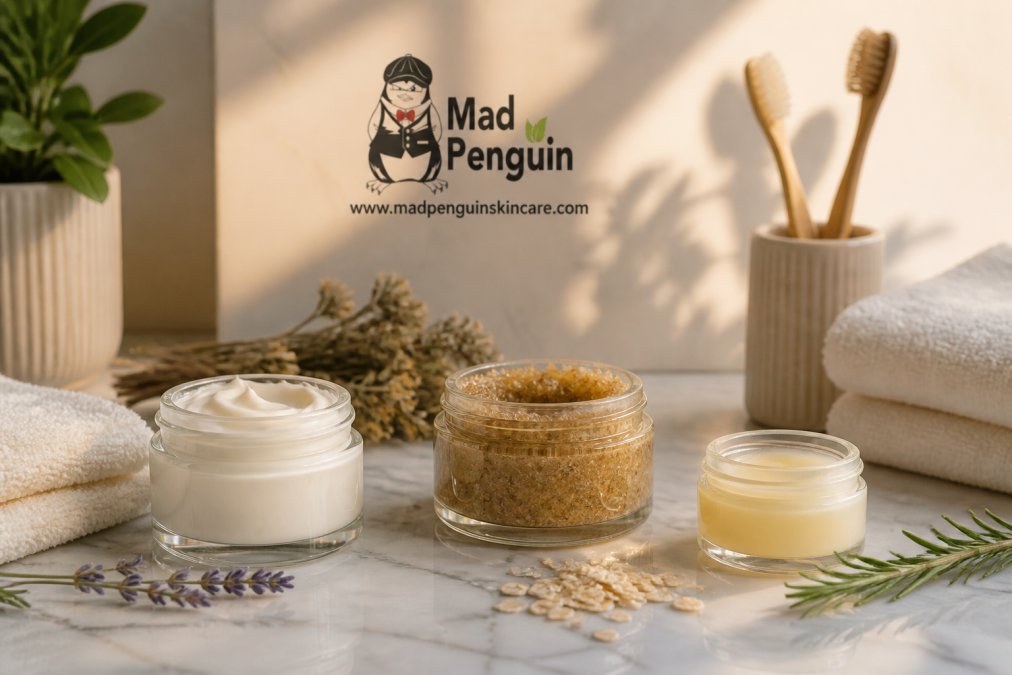
Our pick for anyone dealing with dryness and early fine lines at once. The California Ocean Mineral Anti-Aging Moisturizer is a lightweight day cream built on ocean minerals that hydrates without the heavy film cheaper moisturizers leave behind. At $33, it's the product most people should start with. One honest limitation: it's a daytime formula, so overnight repair needs a separate night cream.
Night's Best Friend Overnight Repair Cream: Wake Up to Smoother Skin
Skin repairs itself while you sleep, and this Night's Best Friend Overnight Repair Cream is formulated for that window with botanical oils, vitamins, and ocean-inspired ingredients. It's richer than the day moisturizer, which is the point. At $35, it handles texture and the look of fine lines over time.
L.A. Hibiscus Natural Face Scrub: Brighten Dull Skin Naturally
Dullness is usually dead skin cells hanging around too long. The L.A. Hibiscus Natural Face Scrub uses hibiscus, naturally rich in vitamin C and antioxidants, to gently lift them without the grit of a harsh exfoliant. At $27, it's the cheapest way to add visible glow. Use it two or three times a week, not daily.

Goodbye Puffy Eyes: Targeted Care for the Delicate Eye Area
The skin around your eyes shows age first and needs a lighter touch than the rest of your face. Goodbye Puffy Eyes is a fast-absorbing antioxidant eye cream aimed at puffiness, dark circles, and fine lines. At $33, it's one of our most reordered items.
| Product | Price | Best For | Key Ingredients |
|---|---|---|---|
| California Ocean Mineral Moisturizer | $33.00 | Dryness, fine lines | Ocean minerals |
| Night's Best Friend Repair Cream | $35.00 | Overnight texture repair | Botanical oils, vitamins |
| L.A. Hibiscus Face Scrub | $27.00 | Dullness, uneven texture | Hibiscus, vitamin C |
| Goodbye Puffy Eyes | $33.00 | Puffiness, dark circles | Plant antioxidants |
Mad Penguin Skincare Reviews: What Customers Actually Say About Ethical Skincare That Works
The most common question we get isn't about ingredients. It's skepticism: "How do I know this isn't just another greenwashing brand?" Fair question, we make verification easy. Our eye cream is vegan and cruelty-free, made in the USA, and formulated without harsh chemicals that trigger sensitive skin.
The second most common concern is price. Our products run $27 to $96, more than drugstore shelves, less than most department-store "clean" lines. What you're paying for is a formula without synthetic fragrance or harsh additives, which matters most if your skin has reacted badly to products labeled natural before. The Healthy Skin Routine bundles all four products at $96, and the Hydrating Skin Starter Kit pairs the scrub and moisturizer at $48.
Building a Complete Cruelty-Free Skincare Routine for Sensitive Skin
A cruelty-free skincare routine for sensitive skin follows the same order as any other: cleanse, treat, moisturize, protect. The difference is what you leave out and which botanicals you leave in. Skip synthetic fragrance, sulfates, and anything promising a "tingle", that sensation usually means irritation.
The Botanicals That Actually Earn Their Place in a Sensitive-Skin Formula
Most brand lists call a product "gentle" without explaining why. Here's the mechanism behind the ingredients worth looking for:
- Hibiscus, naturally rich in vitamin C and antioxidants, and its mild natural acids loosen dead surface cells without the abrasion of a physical scrub. That makes it a better fit for reactive skin than walnut-shell or sugar scrubs.
- Ocean minerals (magnesium, calcium, potassium), help support the skin's moisture barrier, which is the layer that sensitive skin tends to have in shorter supply.
- Botanical oils like jojoba and squalane, mimic the skin's own sebum closely enough that they absorb without clogging, which is why they show up in overnight repair formulas rather than heavy occlusive creams.
- Antioxidants (vitamin E, green tea derivatives), help defend against daily environmental stress, which matters more for skin that's already reactive.
- Oat and chamomile extracts, commonly used to calm visible redness; look for them high on the ingredient list, not at the trace end.
The pattern to notice: effective sensitive-skin formulas rely on gentle chemical exfoliation and barrier-supporting lipids, not on scrubbing or stripping.
A Routine Sequence That Matches Those Ingredients
A simple sequence that works for most people:
- Morning: gentle rinse, antioxidant eye cream, day moisturizer, sun protection
- Evening: hibiscus scrub two or three times a week, night repair cream on the other nights
- Weekly: assess whether your skin barrier feels calm or reactive, and adjust frequency
That last step is the one people skip. Routine optimization isn't about adding more products, it's about noticing what your skin does over two to three weeks and adjusting.
How Mad Penguin Skincare Products Map to Each Step
At Mad Penguin Skincare, each product covers one step without overlapping the others:
- Cleanse and exfoliate: the L.A. Hibiscus Natural Face Scrub uses hibiscus to lift dull surface cells gently. Two or three times a week is the right cadence for most sensitive skin.
- Treat the eye area: Goodbye Puffy Eyes is a fast-absorbing antioxidant eye cream aimed at puffiness, dark circles, and fine lines.
- Moisturize in the morning: the California Ocean Mineral Anti-Aging Moisturizer is a lightweight day cream built on ocean minerals.
- Repair overnight: the Night's Best Friend Overnight Repair Cream is the richer step, formulated with botanical oils and vitamins for the skin's overnight repair window.
If you'd rather not assemble the pieces individually, the Hydrating Skin Starter Kit pairs the scrub and moisturizer, and the Healthy Skin Routine bundles the full four-step lineup.
Conclusion: Making the Switch to Ethical Skincare in 2026
The hard part of switching to cruelty-free skincare isn't finding products. It's cutting through claims that nobody is checking. Once you know to look for an audited certification and a published ingredient list, the field narrows fast.
Mad Penguin Skincare exists for exactly that gap. We make vegan, cruelty-free formulas with natural, non-toxic ingredients, designed for all skin types and made without synthetic chemicals or harsh additives. Start with the California Ocean Mineral Anti-Aging Moisturizer or browse the full Healthy Skin Routine at madpenguinskincare.com. Build a routine you can actually verify.
Frequently Asked Questions
How can I verify if a skincare brand is truly cruelty-free?
Check for third-party certifications like Leaping Bunny or PETA's Beauty Without Bunnies program. These organizations audit supply chains and require brands to commit to no animal testing at any stage, including ingredient suppliers. You can also look for statements on the brand's website confirming they don't sell in markets that require animal testing by law. Mad Penguin Skincare states its products are vegan and cruelty-free, made in the USA with no animal testing.
What is the difference between vegan and cruelty-free skincare?
Vegan means no animal-derived ingredients like beeswax, honey, or lanolin are used. Cruelty-free means no animal testing occurred at any point in development or production. A product can be cruelty-free but contain animal byproducts, or vegan but tested on animals in some markets. The best cruelty-free skincare for 2026 often carries both labels, giving you full transparency about ethics and ingredients.
Does Mad Penguin Skincare offer cruelty-free products?
Yes. Mad Penguin Skincare formulates all products without animal testing and focuses on natural, non-toxic ingredients. Their lineup includes the California Ocean Mineral Anti-Aging Moisturizer, Night's Best Friend Overnight Repair Cream, L.A. Hibiscus Natural Face Scrub, and Goodbye Puffy Eyes Eye Cream. Each product is designed for effectiveness without harsh chemicals, supporting both ethical values and skin health. You can explore the full range on their website.
Are there high-performance cruelty-free alternatives to luxury brands?
Absolutely. Many cruelty-free brands now invest in clinical testing and bio-available ingredients that deliver results comparable to conventional luxury lines. Look for products with botanical extracts, antioxidants, and dermatologist-tested formulas. Mad Penguin Skincare, for example, uses ocean minerals and plant-based actives in its moisturizers and serums, offering visible improvements in hydration and fine lines without animal testing or synthetic fragrance.
What certifications should I look for to ensure a brand is cruelty-free?
The Leaping Bunny certification is the gold standard because it requires independent audits and covers the entire supply chain. PETA's logo is also widely recognized but relies more on brand self-reporting. Some brands also carry vegan trademarks. For the best cruelty-free skincare for 2026, prioritize products with these third-party verifications and check whether the brand sells in regions like mainland China that mandate animal testing.