

Table of Contents
- Understanding Contact Dermatitis and Sensitive Skin
- Ingredients to Avoid with Contact Dermatitis
- What to Use on Face for Contact Dermatitis
- Patch Testing Skincare Products Before Full Use
- Building a Contact Dermatitis Skincare Routine
- Recognizing Symptoms and When to Seek Help
- Frequently Asked Questions
Last Updated: October 15, 2026
Understanding Contact Dermatitis and Sensitive Skin
Contact dermatitis is a skin reaction that occurs when your skin touches something that irritates it or triggers an allergic response. The result is inflammation, redness, and intense itching that can last for days or weeks. At Mad Penguin Skincare, we understand how frustrating this condition can be, especially when you're trying to care for your skin with products you thought were safe.
Your skin has a protective barrier made of lipids and cells that keeps irritants out and moisture in. When contact dermatitis strikes, this barrier becomes compromised. That's why safe skincare for contact dermatitis sufferers isn't just about avoiding triggers, it's about actively rebuilding and protecting what's been damaged.
Allergic vs. Irritant Contact Dermatitis
Two types of contact dermatitis affect people differently, and understanding which one you have matters for treatment.
Allergic contact dermatitis happens when your immune system reacts to a substance it recognizes as a threat. Your skin doesn't touch the allergen and immediately react, instead, the reaction develops over time as your immune system becomes sensitized.
Irritant contact dermatitis is different. It occurs when a substance directly damages your skin's outer layer. This type doesn't require sensitization. Strong irritants can cause a reaction the first time you use them. Common irritants include denatured alcohol, harsh surfactants, and strong fragrances.
The practical difference: allergic reactions tend to be more intense and localized, while irritant reactions can spread and worsen with repeated exposure. Both require different prevention strategies.
How It Affects Your Skin Barrier
Your skin barrier is your first line of defense. It's made of lipids, ceramides, and other barrier-supporting lipids that work together to lock in hydration and keep irritants out.
Contact dermatitis damages this barrier in two ways. First, the inflammatory response itself weakens the barrier's structure. Second, when you scratch the itching, and you will want to, you create tiny breaks that let irritants penetrate deeper.
Once the barrier is compromised, your skin becomes more reactive. Products that never bothered you before may suddenly cause problems. This is why people with active dermatitis often experience a cascade of reactions to multiple products at once.
Ingredients to Avoid with Contact Dermatitis
The safest approach is knowing what to eliminate from your routine before adding anything new.
Common Triggers in Skincare Products
Fragrances are the number one culprit. Both synthetic fragrances and essential oils can trigger reactions in sensitive skin. They're absorbed quickly and can cause both allergic and irritant responses.
Preservatives like methylisothiazolinone, parabens, and formaldehyde releasers are common irritants. While preservatives are necessary to prevent bacterial growth, some formulations use gentler options than others.
Denatured alcohol strips your skin and disrupts the barrier. It's often listed as "alcohol" or "SD alcohol" on labels. Even small amounts can cause irritation in reactive skin.
Fragrance-free doesn't always mean safe. Products labeled fragrance-free may still contain masking fragrances or essential oils. Always read the full ingredient list.
Surfactants, the cleaning agents in cleansers, can be harsh. Sulfates like sodium lauryl sulfate are particularly drying and irritating for contact dermatitis sufferers.
Reading Labels for Hidden Allergens
Learning to read ingredient lists is essential for safe skincare for contact dermatitis sufferers.
Start at the beginning of the list. Ingredients are listed by concentration, so the first five ingredients make up most of the product.
Watch for hidden fragrances. Labels might say "fragrance," "parfum," "essential oil blend," or "natural fragrance." All of these can trigger reactions.
Check for botanical extracts. While "natural" sounds safe, plant extracts like lavender, tea tree, and chamomile are potent allergens.
Look for ceramides, glycerin, and emollients. These ingredients support your barrier instead of damaging it. If you see these early in the ingredient list, the product is likely formulated with barrier health in mind.
What to Use on Face for Contact Dermatitis
Once you've eliminated triggers, the next step is actively supporting your skin's recovery.
Gentle Cleansing and Hydration
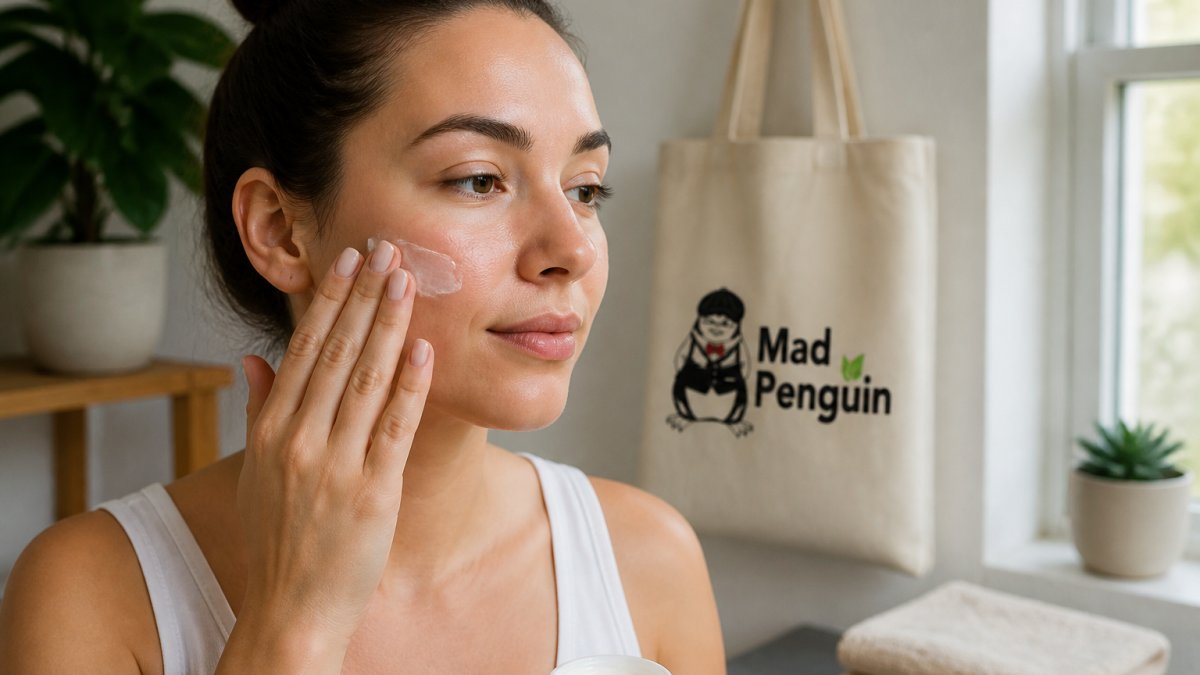
What to use on face for contact dermatitis starts with a gentle cleanser that removes dirt without stripping your skin. Look for cream or milk cleansers rather than foaming formulas.
Cleanse with lukewarm water, not hot. Hot water opens your pores and can increase irritation. Pat your skin dry gently, don't rub.
Hydration is non-negotiable. Apply moisturizer to damp skin immediately after cleansing to lock in water. Glycerin-based products draw moisture into your skin, while emollients seal it in.
The L.A. Hibiscus natural face scrub from Mad Penguin Skincare offers gentle cleansing without harsh abrasives.
Barrier-Supporting Products
Focus on products that contain barrier-supporting lipids: ceramides, cholesterol, and fatty acids. These ingredients restore what contact dermatitis damages.
Moisturizers with ceramides and glycerin should be your foundation. Apply them twice daily, morning and night. The California Ocean Mineral Anti-Aging Moisturizer from Mad Penguin Skincare contains these key ingredients to support barrier recovery while providing hydration.
Soothing agents like colloidal oatmeal and centella asiatica reduce inflammation and itching. These are gentler alternatives to topical steroids for mild to moderate flare-ups.
Avoid occlusive barrier creams with petroleum-based ingredients if you have oily or combination skin. Instead, choose lighter emollients that hydrate without feeling heavy.
Patch Testing Skincare Products Before Full Use
Before introducing any new product to your routine, test it on a small area of skin first. This simple step prevents full-face reactions. But not all patch testing is equal, and understanding the limitations of at-home tests versus professional testing can save you weeks of frustration.
At-Home Patch Testing: A Step-by-Step Protocol
At-home patch testing is a useful screening tool, but it cannot rule out an allergy. It only tells you whether a product causes irritation under the specific conditions you test. Here's how to do it properly:
- Choose the right spot. The inner forearm or behind the ear is ideal, thin skin that's easy to observe.
- Apply a small amount. Use a pea-sized amount of the product, covering an area about the size of a quarter.
- Leave it undisturbed for 48 hours. Don't wash the area or apply anything else over it. If you sweat heavily or the product rubs off, restart the test.
- Check at 24 and 48 hours. Look for redness, itching, swelling, or tiny bumps. A reaction can be delayed, so don't assume you're safe if nothing happens in the first few hours.
- If no reaction, extend to 5 days. Some allergens cause delayed reactions. Continue applying the product once daily to the same spot for up to five days.
- Introduce one product at a time. If you start three new products at once and react, you won't know which one is the culprit. Wait at least a week between adding new items.
Professional Patch Testing: What It Can and Cannot Do
If you have persistent contact dermatitis or multiple suspected triggers, professional patch testing by a dermatologist is the gold standard. It involves applying small patches containing common allergens to your back, usually 20 to 40 substances at a time.
Professional testing can identify specific allergens, including preservatives, fragrances, metals, and resins. However, it cannot test every possible ingredient, only those in the standard series or custom patches your dermatologist prepares. It also cannot predict whether a product will irritate your skin; it only detects allergic reactions.
A key difference: at-home testing tells you if a product irritates your skin. Professional testing tells you if you are allergic to specific ingredients. Both have value, but they answer different questions.
When to Seek Professional Testing
Consider seeing a dermatologist if:
- You've had multiple reactions and can't identify the trigger.
- Your symptoms don't improve after weeks of avoiding suspected products.
- You need to use topical steroids frequently.
- You have a severe reaction with swelling or blistering.
Professional testing requires a referral and may take several visits, but it provides a detailed map of your sensitivities that can guide product choices for years.
At Mad Penguin Skincare, we recommend patch testing every new product, even those labeled hypoallergenic. Our California Ocean Mineral Anti-Aging Moisturizer is formulated with gentle ingredients, but individual sensitivities vary. Always test first.
Building a Contact Dermatitis Skincare Routine
A successful routine for contact dermatitis sufferers has two phases: active management during flare-ups and maintenance during recovery.
Routine During Active Flare-Ups
Keep it minimal. Strip your routine down to three steps:
- Gentle cleanse. Use lukewarm water and a fragrance-free cream cleanser.
- Soothe. Apply a hydrating toner or essence with soothing agents.
- Protect. Layer a barrier-supporting moisturizer.
Skip exfoliants, serums, and active ingredients entirely during flare-ups. Your skin is already inflamed, adding more actives will make it worse.
If itching is severe, apply cool compresses before moisturizing. The cold reduces inflammation and provides temporary relief.
The Goodbye Puffy Eyes - Natural Antioxidant Eye Cream from Mad Penguin Skincare works well around the delicate eye area during flare-ups, providing soothing hydration without irritants.
Recovery and Maintenance
Once your skin improves, gradually reintroduce products. Add one new item every 7-10 days and patch test first.
During recovery, focus on barrier support. Use the California Ocean Mineral Anti-Aging Moisturizer twice daily. Add a hydrating essence or toner with glycerin and soothing botanicals.
Maintenance means consistency. Stick with fragrance-free, gentle products even after your skin heals. Your barrier remains more sensitive than before, so prevention is easier than treating another flare-up.
Night's Best Friend Overnight Repair Cream from Mad Penguin Skincare supports barrier recovery while you sleep, providing deep hydration without irritants.
Recognizing Symptoms and When to Seek Help
Contact dermatitis presents with clear signs. Redness appears first, often in a pattern that matches the trigger's shape. Itching intensifies over hours or days. A rash develops, sometimes with small blisters.
Seek help from a dermatologist if:
- Your reaction doesn't improve after two weeks of avoiding triggers
- Itching is so severe it disrupts sleep or daily activities
- Blisters develop or the rash spreads to large areas
- You suspect a severe allergic reaction (swelling of face or throat)
- You can't identify the trigger despite careful observation
A dermatologist can confirm contact dermatitis, rule out other conditions, and prescribe topical steroids if needed for severe flare-ups.
Frequently Asked Questions
What can you use on your face for contact dermatitis?
Focus on fragrance-free, gentle products with minimal ingredients. Look for moisturizers containing ceramides, glycerin, and emollients that support your skin barrier. Avoid denatured alcohol, synthetic fragrances, and essential oils. Gentle cleansers and barrier creams are essential. Mad Penguin Skincare offers natural, non-toxic options formulated to soothe sensitive skin without harsh additives. Always patch test new products before full application.
How do you patch test a new skincare product?
Apply a small amount of the product to a discreet area like your inner arm or behind your ear. Wait 24-48 hours and observe for redness, itching, burning, or rash. If no reaction occurs, you can cautiously introduce it to your face in a limited area first. For severe contact dermatitis, ask your dermatologist about professional patch testing, which uses standardized allergen panels to identify specific triggers.
What skincare ingredients should people with contact dermatitis avoid?
Avoid synthetic fragrances, essential oils, denatured alcohol, certain preservatives, dyes, and strong chemical sunscreens. Common irritants include benzoyl peroxide, salicylic acid, and retinoids during active flare-ups. Read ingredient lists carefully, fragrance can hide under terms like 'parfum.' Choose fragrance-free products and those free from synthetic chemicals. Mad Penguin Skincare prioritizes clean formulas without these harsh additives, making them suitable for sensitive, irritation-prone skin.
Can fragrance-free skincare help with contact dermatitis?
Yes. Fragrance is a leading cause of contact dermatitis and allergic reactions. Switching to fragrance-free products significantly reduces inflammation and irritation for many people. However, fragrance-free doesn't automatically mean safe, check for other potential triggers like preservatives or essential oils. Natural, non-toxic formulations designed for sensitive skin provide the best results. Visit Mad Penguin Skincare's website to explore products specifically formulated without synthetic fragrances or harsh chemicals.
Contact dermatitis doesn't mean you can't have an effective skincare routine. It means being intentional about what you use. At Mad Penguin Skincare, we believe safe skincare for contact dermatitis sufferers starts with understanding your triggers and choosing products formulated with barrier support in mind. Visit our website to explore our fragrance-free, gentle skincare options designed for sensitive, reactive skin. Your skin deserves care that heals, not harms.