

Last Updated: October 27, 2026
Quick Summary
Low tox living products are worth it when you prioritize by exposure: the biggest gains come from products that sit on your skin all day and those you breathe in indoors. Focus on laundry detergent, moisturizer, cleaning sprays, and food-contact items first, and let the rest of your routine go.
- Rank products by dose, frequency, and contact time rather than by social media fear.
- Aim for 80% of your routine to be intentional and let the other 20% go.
- Choose fragrance-free, dye-free detergent with a short, fully disclosed ingredient list.
- Skip fabric softener and dryer sheets; wool dryer balls add no coating and last hundreds of loads.
- Keep indoor humidity between 30% and 50% to discourage mold.
Table of Contents
- What Low Tox Living Products Actually Change
- How to Start a Low Tox Lifestyle Without Overhauling Everything
- Toxic Ingredients to Avoid in Skincare
- The Best Non-Toxic Laundry Detergent for Sensitive Skin
- Everyday Swaps for Cleaning, Kitchen, and Air
- Reviewing Mad Penguin Skincare: Ingredient Transparency in Practice
- Cost Per Use: What Budget Shoppers Should Weigh
- Build Your Starter Routine with Mad Penguin Skincare
- Frequently Asked Questions
What Low Tox Living Products Actually Change
Most people are not rebuilding their entire home, they want to know which products are worth switching and which are fine as they are.
Here is what low tox living products actually change, what they do not, and how to spend wisely.
The short answer: the biggest gains come from products that sit on your skin all day and the ones you breathe in indoors.
How to Start a Low Tox Lifestyle Without Overhauling Everything
Start with the products you use daily and in the largest amounts, not the ones that scare you most on social media. A low tox lifestyle is a prioritization exercise, not a shopping spree.
Prioritize by Exposure, Not by Fear
Exposure is dose times frequency times contact time. A body lotion applied all over every morning outranks a scented candle; a laundry detergent touching every item you wear outranks a shampoo you rinse out in ninety seconds.
Rank your own products in that order and the list gets short fast. For most households it looks like this:
- Laundry detergent and dryer products, because residue stays against skin all day
- Body and face moisturizer, applied to large surface areas
- Household cleaning sprays, which become airborne
The 80/20 Rule in Practice
A useful frame from the low tox community: aim for 80% of your routine to be intentional and let the other 20% go.
Chasing a 100% chemical-free home is expensive, exhausting, and often not backed by evidence; some experts note microwaves, aluminum cookware, and parabens are not the significant threats social media makes them out to be.
So pick the swaps that touch your body most and stop there. If you want a structured path through the transition, our guide on how to transition to low-tox skincare walks through it step by step so you are not guessing at order.
Toxic Ingredients to Avoid in Skincare
That is the practical list, shorter than most low tox living products guides admit. Before reading labels, know that "natural" and "clean" are marketing words with no legal definition, and "chemical-free" is meaningless since water is a chemical.
What you can actually check:
-
Fragrance or parfum listed without a breakdown, especially in leave-on products
-
Undisclosed preservative blends rather than named preservatives
-
Vague botanical mixes where you cannot tell what percentage of the formula is active
For a practical walkthrough of reading a label line by line, our guide on how to identify non-toxic skincare ingredients covers the terms worth circling and the ones you can ignore.
What the EWG VERIFIED Mark Tells You
The EWG VERIFIED mark means a product meets the Environmental Working Group's standards for ingredient transparency and health, reviewed by their toxicologists and chemists. It is a third-party review of what is disclosed, not a guarantee of performance, a product can carry the mark and still not suit your skin. What it gives you is a way to skip label-decoding on unfamiliar brands.
The Best Non-Toxic Laundry Detergent for Sensitive Skin
Laundry detergent is one of the highest-impact swaps in a low tox living routine because residue stays against your skin for hours. The best non-toxic laundry detergent for sensitive skin is fragrance-free, dye-free, and has a short, fully disclosed ingredient list. How you wash matters as much as what you buy.
What to Look For (and What to Skip)
- Fragrance-free, not unscented. "Unscented" can mean fragrance was added to mask a smell; "fragrance-free" means none was added. If "fragrance" or "parfum" appears on the list, it is not fragrance-free.
- No dyes. Optical brighteners and dyes serve appearance only, add no cleaning power, and can irritate sensitive skin.
- Short ingredient list. Ten ingredients are easier to evaluate than thirty. Look for named surfactants (e.g., sodium lauryl sulfate, coco-glucoside) rather than vague "cleaning agents."
Detergent Types and Sensitive Skin
For sensitive skin, the safest bet is a liquid or powder free of fragrance and dyes. Pods are convenient but can leave residue if the machine is overloaded or the water is cold, and they add plastic film to the waste stream.
Plant-based detergents are not automatically gentler, some plant-derived ingredients can be irritants. The key is the absence of fragrance and dyes, not the source of the surfactant.
How to Wash for Sensitive Skin
- Use the right amount. More detergent means more residue, not cleaner clothes. Follow the dosing guide and adjust for load size and soil level.
- Choose an extra rinse. Most machines have a setting for an additional rinse to remove detergent residue.
- Skip fabric softener and dryer sheets. They coat fabric with a waxy film that traps irritants and reduces absorbency. Wool dryer balls cut drying time, add no coating, and last hundreds of loads.
Stain Removal Without Harsh Chemicals
For common stains, simple methods work:
- Grease: dab with a small amount of fragrance-free dish soap before washing.
- Protein (blood, dairy): rinse in cold water, then apply a paste of baking soda and water.
- Oil-based makeup: pretreat with a small amount of castile soap.
Avoid chlorine bleach unless necessary; oxygen-based bleach (sodium percarbonate) is gentler on fabric and skin.
Keeping Your Machine Clean
Residue builds up in the drum and dispenser and can transfer to clothes. Once a month, run an empty hot-water cycle with a cup of white vinegar or a machine-cleaning tablet, and wipe the door seal and dispenser drawer, especially if you use cold water or liquid detergent.
Product Examples
We do not sell laundry detergent, but look for fragrance-free liquids from brands that disclose full ingredients (e.g., All Free Clear, Tide Free & Gentle), powders in cardboard packaging, and detergent sheets that list every ingredient.
For a low tox routine, the laundry swap is one of the highest-return changes you can make. Pair it with our low tox skincare routine to address the products that sit on your skin all day.
Everyday Swaps for Cleaning, Kitchen, and Air
Most low tox guides list swaps and leave you to figure out where to start. That is backward. The swaps that matter most reduce exposure where it counts: indoor air, surfaces you touch daily, and the food you eat.
How to Prioritize Your Swaps
Exposure is dose times frequency times contact time. Apply that to your home:
- Air first. Indoor air concentrates VOCs from cleaning sprays, air fresheners, and candles. Stop adding synthetic fragrance to the air, open windows, and skip plug-in fresheners and aerosols. If you want scent, simmer citrus peels or use a beeswax candle. This is the highest-impact, lowest-cost swap.
- Surfaces you touch and eat off. Replace plastic cutting boards with wood or bamboo, and plastic food storage with glass or stainless steel, especially for hot and acidic foods. Avoid heating food in plastic.
- Cleaning products that become airborne. Sprays disperse into the air you breathe. Switch to liquid or cream cleaners applied with a cloth, or make simple DIY cleaners.
- Laundry and bedding. These touch your skin for hours. Choose natural fibers (cotton, linen) and wash before first use.
- Occasional-use products. Candles lit twice a month, special-occasion makeup, and craft supplies are lower priority.
A Short Kit for Cleaning
You do not need a cabinet full of specialty products. A short kit covers nearly everything:
- White vinegar for glass, hard water, and the rinse cycle. Mix equal parts vinegar and water in a spray bottle for glass and mirrors.
- Baking soda as a mild abrasive for sinks and tubs; make a paste with water for scrubbing.
- Castile soap for general surface cleaning; dilute a few tablespoons in a quart of water.
Kitchen and Food-Contact Swaps
- Cutting boards: wood or bamboo over plastic, which sheds microplastics into food and harbors bacteria in knife grooves.
- Food storage: glass or stainless steel over plastic. If you must use plastic, avoid heating it and do not store acidic or fatty foods in it long.
- Cookware: stainless steel, cast iron, or enameled cast iron over nonstick coatings that degrade at high heat. If you use nonstick, keep heat moderate and replace when scratched.
Air Quality Beyond Fragrance
- Ventilation: run the exhaust fan when cooking, especially with gas stoves, and open windows ten minutes a day in mild weather.
- Dust: use a damp cloth rather than a feather duster, which just moves dust into the air.
- Humidity: keep indoor humidity between 30% and 50% to discourage mold.
What to Skip
- "Chemical-free" claims: meaningless, since water is a chemical.
- Essential oil diffusers as air "purifiers": they add VOCs, not remove them.
- Antibacterial everything: plain soap and water work for most cleaning; reserve disinfectants for illness or high-risk situations.
Cost and Availability
The swaps above are inexpensive and widely available. White vinegar and baking soda cost a few dollars each and last months.
For the skincare side of your low tox routine, Mad Penguin Skincare offers a range of products formulated with natural ingredients. Start with our Hydrating Skin Starter Kit to cover the daily essentials.
Reviewing Mad Penguin Skincare: Ingredient Transparency in Practice
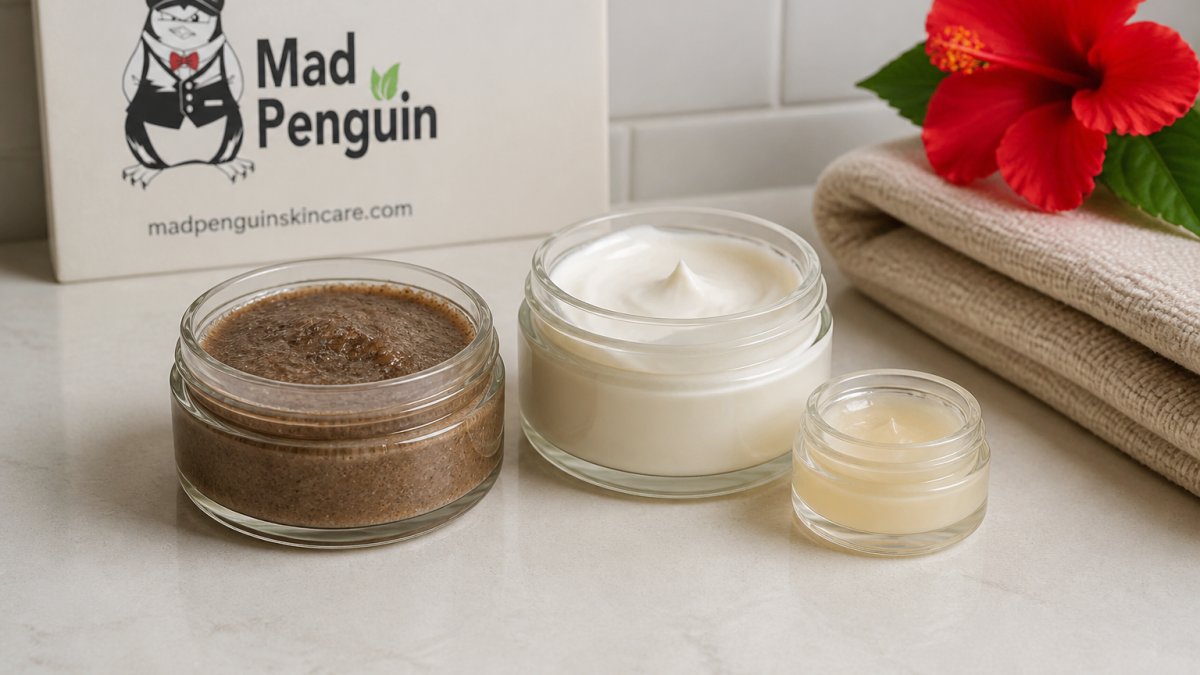
Mad Penguin Skincare builds its line around clean formulas free from synthetic chemicals and harsh additives.
Cleanser and Exfoliant
The L.A. Hibiscus natural face scrub is a $27.00 exfoliating treatment. Its listing says hibiscus is naturally rich in vitamin C and antioxidants, and that the scrub gently removes dead skin cells while helping improve skin texture and glow.

Moisturizer and Overnight Repair
The California Ocean Mineral Anti-Aging Moisturizer at $33.00 is described as a lightweight, nourishing moisturizer that helps hydrate skin and reduce the appearance of fine lines. The Night's Best Friend Overnight Repair Cream at $35.00 is described as a nighttime cream with botanical oils and vitamins that deeply hydrates and nourishes skin overnight.


Eye Cream and Bundles
The Goodbye Puffy Eyes Natural Antioxidant Eye Cream at $33.00 is described as a natural, lightweight eye cream with plant-based ingredients and antioxidants that helps reduce the appearance of puffiness, dark circles, and fine lines.
Cost Per Use: What Budget Shoppers Should Weigh
Run the math on your own routine before you buy anything:
| Product | Price | Typical Use | Approx. Cost Per Use |
|---|---|---|---|
| L.A. Hibiscus face scrub | $27.00 | 2-3x weekly | Low, lasts months |
| Ocean Mineral Moisturizer | $33.00 | 2x daily | Under $0.40 |
| Night's Best Friend cream | $35.00 | 1x nightly | Under $0.40 |
| Goodbye Puffy Eyes eye cream | $33.00 | 2x daily | Under $0.20 |
| Hydrating Skin Starter Kit | $48.00 | 2 products | Lower than buying separately |
| Healthy Skin Routine | $96.00 | 4 products | Lowest per product |
The Hydrating Skin Starter Kit at $48.00 includes the Hibiscus Scrub and California Ocean Mineral Anti-Aging Moisturizer. The Healthy Skin Routine at $96.00 includes four products: the moisturizer, Hibiscus Face Scrub, eye cream, and Night's Best Friend Night Cream.
Build Your Starter Routine with Mad Penguin Skincare
The cheapest way into low tox living products is one considered purchase, not five impulse ones. Start with what you will actually use every day and let the rest of your cabinet run down.
The Complete Routine includes four products, while the Hydrating Skin Starter Kit includes the Hibiscus Scrub and California Ocean Mineral Anti-Aging Moisturizer. The Goodbye Puffy Eyes eye cream is described as helping reduce the appearance of puffiness, and the Night's Best Friend cream is described as an overnight moisturizer.
Mad Penguin Skincare offers natural, non-toxic skincare formulated for all skin types, with clean formulas free from synthetic chemicals and harsh additives. The brand describes its products as eco-friendly and responsibly made.
Frequently Asked Questions
What are the best low tox living products for beginners?
Start with the products that touch your skin and lungs most often: laundry detergent, hand soap, all-purpose cleaner, and a daily moisturizer. Pick unscented laundry formulas for sensitive skin, swap aerosol air fresheners for ventilation, and choose skincare with a short, readable ingredient list. Mad Penguin Skincare's Hydrating Skin Starter Kit at $48.00 includes a Hibiscus Scrub and California Ocean Mineral Anti-Aging Moisturizer.
How do I identify non-toxic products for my home?
Read the full ingredient list, not the front label. Look for ingredient information that helps you assess what a product contains.
Are low tox products more expensive than conventional ones?
Sometimes per bottle, rarely per use. Compare costs using the prices and product details available to you. Mad Penguin Skincare's Healthy Skin Routine at $96.00 includes four products: the California Ocean Mineral Anti-Aging Moisturizer, Hibiscus Face Scrub, eye cream, and Night's Best Friend Night Cream.
How can Mad Penguin Skincare support a low tox lifestyle?
Mad Penguin Skincare builds its lineup around clean formulas free from synthetic chemicals and harsh additives. The range includes the L.A. Hibiscus natural face scrub at $27.00, the California Ocean Mineral Anti-Aging Moisturizer at $33.00, the Goodbye Puffy Eyes cream at $33.00, and Night's Best Friend Overnight Repair Cream at $35.00. The brand describes its products as eco-friendly and responsibly made.
What are the benefits of switching to low tox living products?
Mad Penguin Skincare describes its products as natural and non-toxic, with clean formulas free from synthetic chemicals and harsh additives. The brand's stated benefits include supporting healthy skin and hydrating and nourishing naturally.
The hardest part of low tox living is not finding products. It is knowing which ones deserve a place in your routine and which are noise. Mad Penguin Skincare makes that decision simpler with clean formulas free from synthetic chemicals and harsh additives, natural ingredients chosen for results, and eco-friendly packaging that reduces waste rather than just talking about it. Get started with Mad Penguin Skincare and build a routine you can actually keep.
