

Table of Contents
- Start Slow: A Phased Approach to Low-Tox Skincare
- Ingredients to Avoid in Skincare: What to Look For
- How to Read Skincare Labels Like a Pro
- The Skincare Detox Timeline: What to Expect Week by Week
- How to Build a Minimalist Skincare Routine That Sticks
- Budget-Friendly Swaps and DIY Options for Low-Tox Skincare
- Frequently Asked Questions
Last Updated: September 23, 2026
Start Slow: A Phased Approach to Low-Tox Skincare
Learning how to transition to low-tox skincare works best when you treat it like a slow habit change, not a weekend purge. Most people who quit clean beauty do it because they swapped everything at once and their skin panicked.
The fix is boring but effective: change one product at a time, give your skin two to three weeks to adjust, then move to the next.
Here's the phased approach that actually holds up:
- Weeks 1-2: Swap your cleanser or face scrub first
- Weeks 3-4: Replace your moisturizer
- Weeks 5-6: Add a night cream or eye cream
- Weeks 7+: Tackle body care, hair care, and makeup
Why start with cleansing? Because it's the step your skin tolerates fastest. A gentle L.A. Hibiscus natural face scrub removes dead skin cells without stripping your barrier the way harsh sulfates can.

Ingredients to Avoid in Skincare: What to Look For
The ingredients to avoid in skincare fall into a few clear groups: synthetic fragrances, parabens, phthalates, sulfates, and some preservatives like formaldehyde releasers.
You don't need to memorize a 200-item list. Focus on the categories that matter most.
| Ingredient Group | Why It's Flagged | Common Label Names |
|---|---|---|
| Synthetic fragrances | Can irritate sensitive skin | "Fragrance," "Parfum" |
| Parabens | Linked to endocrine disruptor concerns | Methylparaben, Propylparaben |
| Phthalates | Often hide inside "fragrance" | DEP, DBP, DEHP |
| Sulfates | Strip natural oils | SLS, SLES |
| Formaldehyde releasers | Preservative concerns | DMDM hydantoin |
A quick note on the word "toxin." It gets thrown around loosely in clean beauty, and that sloppiness hurts the cause. Many of these ingredients aren't acutely toxic. The real concern is repeated, low-level chemical exposure over years, and how that adds up for people with sensitive systems.
So don't panic. Just reduce your load where you can.
How to Read Skincare Labels Like a Pro
Reading a skincare label comes down to three habits: check the order, learn your red-flag names, and ignore the front of the bottle.
Ingredients are listed by concentration, largest first. If "Fragrance" sits near the top, that product has a lot of it. If it's the last item, the amount is tiny.
Here's the routine:
- Flip the bottle and read the back panel first
- Scan the first five ingredients, since those dominate the formula
- Look for "Fragrance" or "Parfum" and note its position
- Check whether the product lists preservatives at all (a water-based product with zero preservatives is a red flag for bacteria)
- Cross-check claims like "natural" or "clean" against the actual list
That last point matters. The word "natural" isn't tightly regulated on cosmetic labels, so it can mean almost anything. "Organic" is stricter, because it ties to certification standards.
The Skincare Detox Timeline: What to Expect Week by Week
The skincare detox timeline is real, and knowing what's coming keeps you from quitting at week two. But most guides give you a vague calendar without explaining why your skin reacts, or how to tell a harmless purge from a genuine irritation that means you should stop.
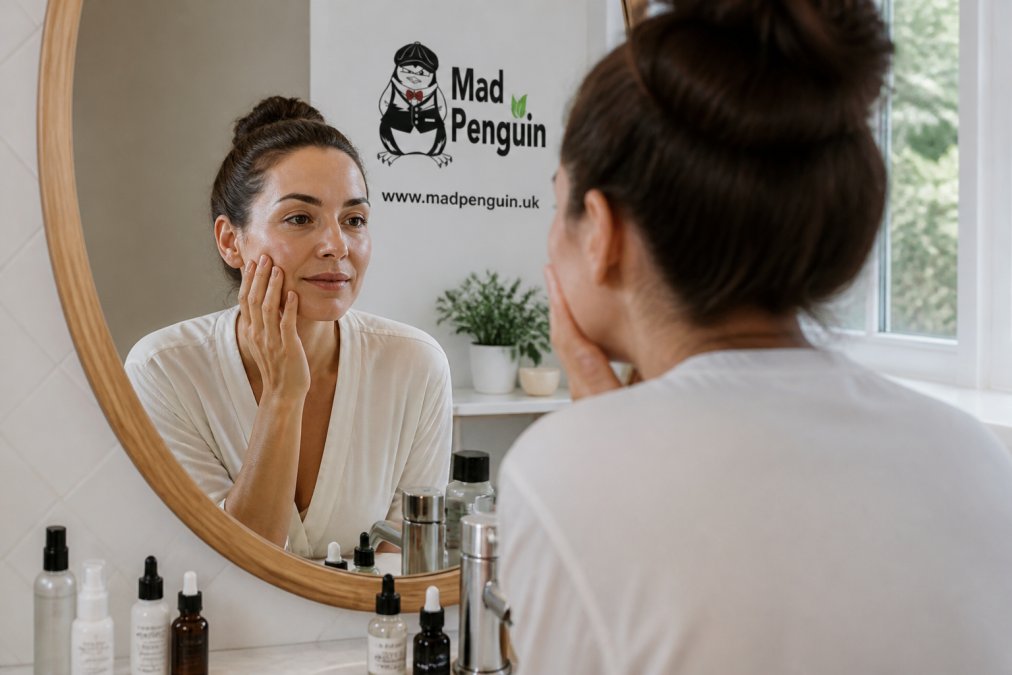
- Week 1: Skin may feel drier or tighter as it adjusts to gentler formulas. If you removed sulfates, your skin is no longer overproducing oil to compensate for being stripped. That rebound can feel like dryness before it feels like balance.
- Week 2: Some people see a "purge" phase with small breakouts. This is the part most guides skip. When you switch from harsh actives or occlusive ingredients to gentler formulas, your skin can push out congestion it was masking before. The breakouts typically appear in the same places you normally break out, not in new, random areas.
- Weeks 3-4: Skin starts to balance; oil production often settles as your barrier rebuilds. This is when most people notice their skin feels less reactive to temperature and touch.
- Weeks 5-6: Texture and tone begin to even out. If you added a gentle exfoliant like a L.A. Hibiscus natural face scrub, this is when you'll see smoother texture without the tightness that harsh scrubs cause.
- Weeks 7-8: Most people notice a healthier glow. Barrier function is largely restored, and your skin is no longer in adjustment mode.
Purging vs. Irritation: How to Tell the Difference
The purge phase is temporary, usually one to two weeks. But not every breakout during a transition is a purge. Here's the clinical distinction that most lifestyle blogs miss:
| Signal | Purging | Irritation |
|---|---|---|
| Location | Same areas you normally break out | New, unusual areas (cheeks, jawline, neck) |
| Sensation | Mild congestion, no pain | Stinging, burning, itching, or hot skin |
| Timeline | Improves within 2-3 weeks | Worsens or persists past 3 weeks |
| Texture | Small surface bumps | Rough, flaky, or swollen patches |
The Scientific Nuance on "Toxins"
A quick note on the word "toxin." It gets thrown around loosely in clean beauty, and that sloppiness hurts the cause. Many flagged ingredients aren't acutely toxic. The real concern is repeated, low-level chemical exposure over years, and how that adds up for people with sensitive systems.
How to Build a Minimalist Skincare Routine That Sticks
A minimalist skincare routine is four steps: cleanse, treat, moisturize, protect. That's it. Fewer products means fewer chances for irritation and a much easier time staying consistent.
The steps:
- Cleanse morning and night with a gentle formula
- Treat with one targeted product, like an eye cream or serum
- Moisturize to support your skin barrier health
- Protect with sunscreen every morning
Budget-Friendly Swaps and DIY Options for Low-Tox Skincare
You don't need a big budget to make the switch. But the generic advice to "swap one product per paycheck" ignores the real question: which swaps give you the most benefit for the least money, and which DIY projects are actually safe?
Prioritize by Exposure, Not by Price
Not all products matter equally. The ones that stay on your skin longest, moisturizers, serums, body lotions, have more opportunity for absorption than a cleanser you rinse off in 30 seconds. So if you're on a tight budget, spend first on leave-on products and save on rinse-offs.
A practical order:
- Moisturizer and body lotion, highest exposure, swap first
- Serum or eye cream, thin formulas absorb quickly
- Sunscreen, daily use, but many mineral options are affordable
- Cleanser, rinse-off, lower priority
- Scrub or mask, used 1-2 times weekly, lowest priority
DIY That Works vs. DIY That's Risky
DIY works well for some steps and poorly for others. Here's the honest breakdown:
Safe DIY (no water, no preservation needed):
- Oat-and-honey mask: colloidal oatmeal soothes irritation, honey is naturally antibacterial
- Oil cleanser: equal parts castor and jojoba oil for a first cleanse
- Sugar or salt body scrub: mix with coconut or olive oil
- Clay mask: bentonite or kaolin clay mixed with water, used immediately
Risky DIY (water-based, needs preservation):
- DIY face creams and lotions, any formula with water or aloe vera juice can grow bacteria within days
- DIY toners with witch hazel and water, same preservation problem
- DIY sunscreen, impossible to verify SPF at home, and the FDA has warned against homemade sunscreen claims
The Refill and Multi-Use Strategy
One of the most effective budget moves is choosing products that do more than one job. A gentle L.A. Hibiscus natural face scrub can double as a cleanser on days you need light exfoliation. A Hydrating Skin Starter Kit covers cleanse and moisturize in one purchase, which cuts both cost and clutter.

Frequently Asked Questions
What are the top ingredients to avoid in skincare when going low-tox?
The most common ingredients to avoid in skincare include synthetic fragrances, parabens, phthalates, sulfates, and formaldehyde-releasing preservatives. These are linked to irritation, endocrine disruption, and allergic reactions. Check labels for terms like 'fragrance,' 'parfum,' 'methylparaben,' 'propylparaben,' 'sodium lauryl sulfate,' and 'phthalates.' Choosing products with plant-based alternatives and transparent ingredient lists makes it easier to reduce your chemical exposure over time.
How long does the skincare detox timeline take before I see results?
Most people notice improvements within 2 to 4 weeks, but the full skincare detox timeline can take 6 to 8 weeks. During the first two weeks, your skin may purge as it adjusts to new formulations. Weeks three and four often bring reduced irritation and better hydration. By weeks six to eight, many people see more consistent tone and texture. Patch testing and introducing one product at a time helps you track what works for your skin.
Is 'clean beauty' regulated by the FDA?
The FDA does not regulate the term 'clean beauty,' so it can mean different things depending on the brand. Some companies use it to mean free from certain synthetic ingredients, while others use it loosely. Because there is no official definition, ingredient transparency matters more than marketing claims. Look for brands that list every ingredient, avoid vague terms like 'fragrance,' and offer third-party testing or certifications when possible.
How do I start a low-tox skincare routine on a budget?
Start by replacing one product at a time, beginning with whatever covers the largest area of your skin, like cleanser or moisturizer. A hydrating starter kit can cover the basics without buying everything separately. You can also simplify your routine to three steps: cleanse, moisturize, and protect. DIY options like oat masks or honey cleansers work for some people, but they lack preservatives, so use them fresh and patch test first.