

Table of Contents
- Why Mature Dry Skin Needs a Different Approach
- Key Ingredients in Clean Skincare for Mature Dry Skin
- Best Natural Moisturizer for Aging Skin: What to Look For
- How to Hydrate Mature Skin Naturally: A Simple Routine
- Product Comparison: Mad Penguin Skincare Picks
- Ingredient Interactions and Sustainability in Clean Skincare
- Frequently Asked Questions
Last Updated: September 20, 2026
Why Mature Dry Skin Needs a Different Approach
Clean skincare for mature dry skin starts with one fact most routines ignore: after 40, your skin loses moisture faster and repairs itself more slowly. The same cleanser that worked at 30 can leave you tight and flaky at 50.
At Mad Penguin Skincare, our formulas skip synthetic chemicals and harsh additives, because mature skin reacts to them faster than younger skin does.
Below, we'll show you exactly which ingredients matter, how to layer them, and which products fit a routine you'll actually keep.
How Hormonal Shifts Affect Skin After 40
Estrogen decline is the quiet driver behind most mature dry skin. As estrogen drops, oil production falls, collagen production slows, and the skin barrier thins. Fine lines deepen. Age spots appear more easily.
Many women notice the change first on their cheeks and jawline, where dryness hits hardest. A common mistake is treating it as simple dehydration and doubling down on heavy creams. The real fix is barrier support, not more grease.
The Skin Barrier and Transepidermal Water Loss
Transepidermal water loss is the process by which water evaporates through the skin's surface without you noticing. A weakened barrier lets more water escape, which is why mature skin feels dry even after moisturizing.
Ceramides, the fats that hold your barrier together, decline with age. That's why a biomimetic moisturizer, one that mimics your skin's own lipids, outperforms a rich but occlusive cream. You're rebuilding the wall, not just coating it.
Key Ingredients in Clean Skincare for Mature Dry Skin
The best clean skincare for mature dry skin pairs three things: humectants that pull in water, emollients that soften, and antioxidants that defend. Miss one and the routine underperforms.
Look for short, readable ingredient lists. A formula with ten purposeful ingredients usually beats one with forty.
Hydrators: Hyaluronic Acid, Ceramides, and Glycerin
Hyaluronic acid holds water at the surface. Glycerin draws moisture from the air into the upper layers. Ceramides seal it all in.
Jojoba oil and rosehip oil work as emollients, softening rough patches without clogging pores.
Antioxidants and Retinol Alternatives for Fine Lines
Retinol works, but it irritates a lot of mature, sensitive skin.
Hibiscus is one of the better ones. It's naturally rich in vitamin C and antioxidants, and it supports cell turnover gently. Green tea extract and aloe vera add soothing agents that calm redness while you treat fine lines.
American Academy of Dermatology guidance on aging skin
Best Natural Moisturizer for Aging Skin: What to Look For
The best natural moisturizer for aging skin does two jobs at once: it plumps dry skin immediately and supports collagen production over time.
Here's what separates a real performer from a nice-smelling jar:
- Ceramides or plant oils high on the list, not buried at the bottom. Ceramides are the lipids that make up roughly half of your skin barrier; when they decline with age, water escapes faster.
- Humectants plus occlusives in the same formula. Glycerin and hyaluronic acid pull water in; shea butter, jojoba, and squalane hold it there.
- No synthetic fragrance, which triggers irritation on thin, mature skin.
- Antioxidants like vitamin C, green tea extract, or hibiscus for free radical protection. UV and pollution generate free radicals that break down collagen; antioxidants neutralize them before they do.
- A texture you'll wear daily, because consistency beats intensity.
Why Hormonal Changes Change What Your Moisturizer Needs
Estrogen decline after menopause doesn't just reduce oil production. It reduces the skin's ability to synthesize collagen and ceramides, and it slows the barrier's recovery after any irritation. That's why a moisturizer that worked at 35 can feel insufficient at 55 even if nothing else changed.
The practical takeaway: mature dry skin needs barrier-rebuilding ingredients, not just water-binding ones.
How to Read a Clean Moisturizer Label
"Clean" isn't regulated, so the label alone won't tell you much. What helps is scanning for three things: the first five ingredients (those make up most of the formula), the absence of synthetic fragrance and drying alcohols, and a stated purpose for each active.
A formula with ten purposeful ingredients usually beats one with forty.
At Mad Penguin Skincare, our California Ocean Mineral Anti-Aging Moisturizer is built around this approach: mineral-rich hydration, plant-based antioxidants, and no synthetic fragrance or harsh additives. It's designed to be the daily moisturizer you actually finish.

How to Hydrate Mature Skin Naturally: A Simple Routine
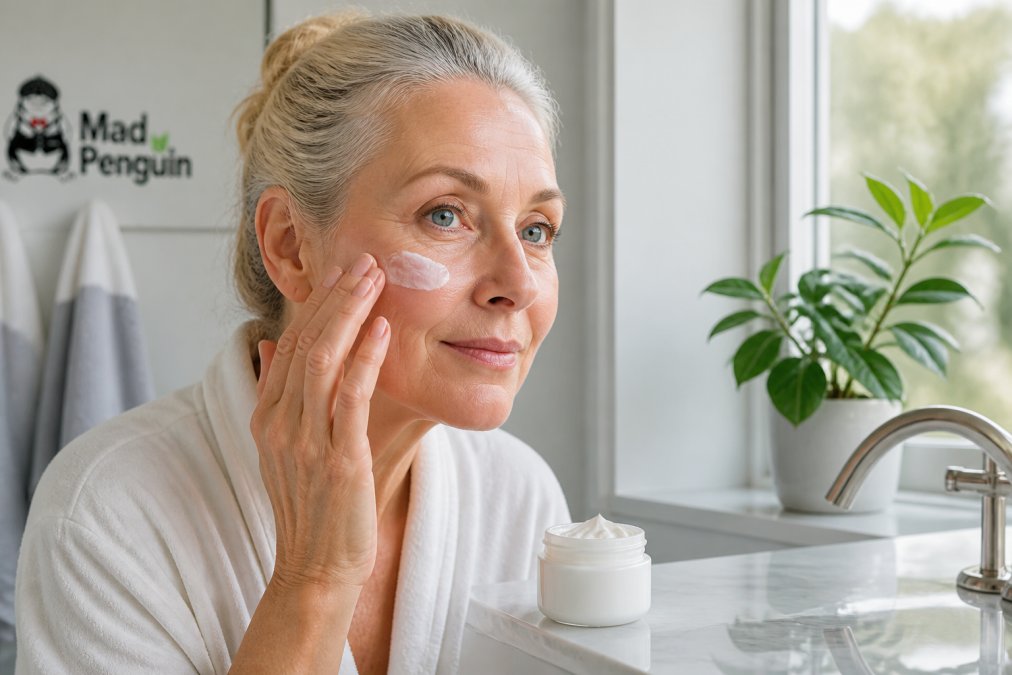
Learning how to hydrate mature skin naturally comes down to order and timing. Four steps in the morning, three at night. That's it.
Morning Steps: Cleanse, Treat, Protect
Start with a gentle cleanser. Skip foaming formulas, which strip oil your skin can't afford to lose.
Evening Steps: Repair and Replenish
Night is when skin does its repair work. Use the same gentle cleanse, then treat, then seal.
Product Comparison: Mad Penguin Skincare Picks
Every product below is natural, non-toxic, and free from synthetic chemicals and harsh additives. Here's how they fit together.
| Product | Price | Best For | Step in Routine |
|---|---|---|---|
| Hydrating Skin Starter Kit | $48.00 | Beginners wanting a full routine | Cleanse + moisturize |
| California Ocean Mineral Anti-Aging Moisturizer | $33.00 | Daily hydration and fine lines | Morning and evening |
| Night's Best Friend Overnight Repair Cream | $35.00 | Overnight repair | Evening only |
| L.A. Hibiscus natural face scrub | $27.00 | Dullness and texture | Twice weekly |
| Goodbye Puffy Eyes Natural Antioxidant Eye Cream | $33.00 | Dark circles and puffiness | Morning and evening |
Ingredient Interactions and Sustainability in Clean Skincare
Two ingredients can be perfectly good alone and a problem together. This is the part most guides skip, and it's where mature dry skin gets irritated most often.


Which Clean Actives Should Not Be Layered
- Vitamin C and retinol alternatives. Vitamin C works best at a low pH; retinol and many botanical retinol alternatives work at a higher pH. Layered together, both lose potency and irritation risk rises.
- Exfoliating acids and retinol alternatives. Using a scrub or acid toner on the same night as a retinol alternative doubles the exfoliation load. On mature, thin skin that often means redness and a compromised barrier.
- Niacinamide and strong acids. Niacinamide plays well with almost everything, but in high concentrations alongside strong acids it can cause flushing.
- Hyaluronic acid in very dry air. Hyaluronic acid pulls water from its surroundings. In low humidity it can pull water out of your skin instead of into it.
A common mistake is stacking five actives at once, then blaming the products when skin reacts.
Sustainability Without the Greenwashing
Sustainability in clean skincare is more than a label. For mature skin, the practical question is whether the packaging and formula support the long-term routine you'll actually keep.
Look for:
- Recyclable or refillable packaging with a clear statement of what the container is made of. Vague "eco-friendly" claims without specifics are a red flag.
- Concentrated formulas that let you use less per application.
- Brands that publish their ingredient sourcing. Transparency about where botanicals come from is a better signal than a leaf icon on the label.
U.S. Environmental Protection Agency information on recycling
Frequently Asked Questions
What ingredients should I look for in clean skincare for mature dry skin?
Look for hydrators like hyaluronic acid, ceramides, and glycerin to pull water into the skin and seal it in. Antioxidants such as vitamin C, green tea extract, and rosehip oil help protect against free radicals that speed up fine lines. Niacinamide supports the moisture barrier, while gentle exfoliants like hibiscus or jojoba beads encourage cell turnover without irritation. Avoid synthetic fragrances and harsh sulfates that can strip already fragile skin.
Are there non-toxic alternatives to retinol for mature skin?
Yes. Plant-based options like rosehip oil, which contains natural vitamin A precursors, and bakuchiol offer similar smoothing effects without the peeling and redness often associated with retinol. Hibiscus is another gentle alternative, rich in natural acids and antioxidants that help brighten dull skin and soften the look of fine lines. These ingredients support collagen production and cell turnover more slowly, so consistency matters more than strength.
How does clean skincare differ from conventional products for aging skin?
Clean skincare avoids synthetic chemicals, harsh additives, and artificial fragrances that can irritate mature skin, which is thinner and more reactive over time. Instead, it relies on plant-based, certified-organic, and non-toxic ingredients that work with your skin's natural repair processes. Clean formulas focus on long-term hydration and skin health.
Can natural skincare effectively treat deep wrinkles and dryness?
Natural skincare can significantly improve the appearance of fine lines and dryness by restoring hydration and supporting the moisture barrier. Ingredients like ceramides, hyaluronic acid, and plant oils replenish lipids that diminish with age, while antioxidants protect against further damage. Deep wrinkles may not disappear entirely, but consistent use of a rich moisturizer and overnight repair cream can plump the skin, making wrinkles less noticeable and improving overall texture.
What is the best routine for mature skin that feels tight and dry?
Start with a gentle, non-foaming cleanser to avoid stripping natural oils. Apply a hydrating serum or essence while skin is still damp, then seal in moisture with a rich moisturizer containing ceramides or ocean minerals. In the evening, use an overnight repair cream to support the skin's natural regeneration. Exfoliate once or twice a week with a gentle scrub to boost cell turnover. Always finish your morning routine with sun protection.