

Table of Contents
- What Eco-Friendly Packaging in Skincare Actually Means
- Materials That Work: Glass, Aluminum, PCR, and Cellulose-Based Polymers
- How to Recycle Skincare Containers Without Contaminating the Stream
- Refillable Skincare Systems: The Circular Economy in Practice
- Building a Zero Waste Skincare Routine That Still Works
- The Trade-Offs Nobody Mentions: Preservation, Shipping, and Greenwashing
- Conclusion
- Frequently Asked Questions
Last Updated: September 25, 2026
What Eco-Friendly Packaging in Skincare Actually Means
Eco-friendly packaging in skincare is any container system designed to reduce environmental harm across its full life cycle, from material sourcing to end-of-life disposal. That definition covers a lot more ground than most brands admit. A jar made of recycled glass qualifies. A "plant-based" tube that ends up in a landfill usually doesn't.
This guide from Mad Penguin Skincare breaks down what's real, what's marketing, and what you should actually look for. Because the gap between those three things is wider than you'd think. According to the U.S. Environmental Protection Agency's container and packaging data, containers and packaging make up a significant share of municipal solid waste, and the beauty aisle contributes its fair share of it.
Here's the tension running through this whole topic: the most sustainable packaging material isn't always the one that protects your product best. That trade-off is where greenwashing hides.
Recyclable vs. Compostable vs. Biodegradable: The Real Differences
Recyclable means a material can be collected, processed, and turned into new products through an established system. Glass and aluminum are genuinely recyclable almost everywhere.
Compostable means a material breaks down into organic matter under specific conditions, usually industrial composting. Most curbside programs don't accept it.
Biodegradable is the loosest term of the three. Everything biodegrades eventually, including plastic, given enough decades. Without a timeframe attached, the word means almost nothing.
That distinction matters more than any label on a box.
Materials That Work: Glass, Aluminum, PCR, and Cellulose-Based Polymers
Not all eco-friendly materials are equal. The ones that actually reduce environmental harm share a common trait: they have established end-of-life pathways. Glass, aluminum, and post-consumer recycled (PCR) plastic are the three with proven recycling infrastructure behind them. Cellulose-based polymers are the newer option, made from plant fiber, and they're improving fast but still face infrastructure gaps.
Glass: Heavy but Highly Recyclable
Glass is infinitely recyclable without loss of quality. A glass jar can be melted down and reformed into a new jar repeatedly, and curbside programs accept it almost everywhere. The catch is weight. Glass is roughly five to ten times heavier than equivalent plastic packaging, which means more fuel burned during transport. A glass jar shipped across the country can carry a higher transport carbon footprint than a lightweight plastic one, even though the glass recycles better.
Aluminum: Lightweight and Highly Recyclable
Aluminum is lightweight, highly recyclable, and has a high scrap value, which gives it a strong economic incentive to be recycled. It's ideal for balms, sticks, and tubes. The main drawback is chemical reactivity: aluminum can react with acidic formulas, so it's not suitable for every product type. When it works, it's one of the best options available.
Post-Consumer Recycled (PCR) Plastic: Closing the Loop
PCR plastic is material recovered from finished products that consumers already used, then reprocessed into new packaging. It's different from pre-consumer scrap, which never reached a customer. A common mistake is assuming any "recycled" claim means post-consumer. Many brands blend a small amount of factory scrap into virgin plastic and call it recycled. Ask specifically for the PCR percentage. If a brand won't state it, that's your answer.
Cellulose-Based Polymers: Plant Fiber Innovation
Cellulose-based polymers are made from plant fiber and are biodegradable under the right conditions. They're best for secondary cartons and outer packaging. The problem is that few facilities accept them curbside, so they often end up in landfill despite being marketed as eco-friendly. They're improving fast, but the infrastructure hasn't caught up.
| Material | Recyclability | Best For | Main Drawback |
|---|---|---|---|
| Glass | High, widely accepted | Creams, serums, oils | Heavy, higher shipping emissions |
| Aluminum | High, widely accepted | Balms, sticks, tubes | Can react with acidic formulas |
| PCR plastic | Medium, varies by region | Pumps, caps, tubes | Limited local recycling access |
| Cellulose-based polymers | Low, few facilities | Secondary cartons | Rarely accepted curbside |
Material Sourcing and the Full Life Cycle
Material sourcing transparency matters here too. Where the glass comes from, how far it travels, and whether the supplier uses renewable energy all shape the real environmental impact. A jar made from recycled glass sourced locally has a very different footprint than one made from virgin glass shipped from overseas. The same logic applies to aluminum and PCR plastic. When you're evaluating a brand's packaging, ask not just what it's made of but where it came from and how it got to you.
How to Recycle Skincare Containers Without Contaminating the Stream
The biggest mistake people make is tossing half-empty containers into the bin. Residue contaminates entire batches of recyclables at the sorting facility. But the second biggest mistake is assuming the whole container is recyclable when it's actually a mix of materials that need to be separated.
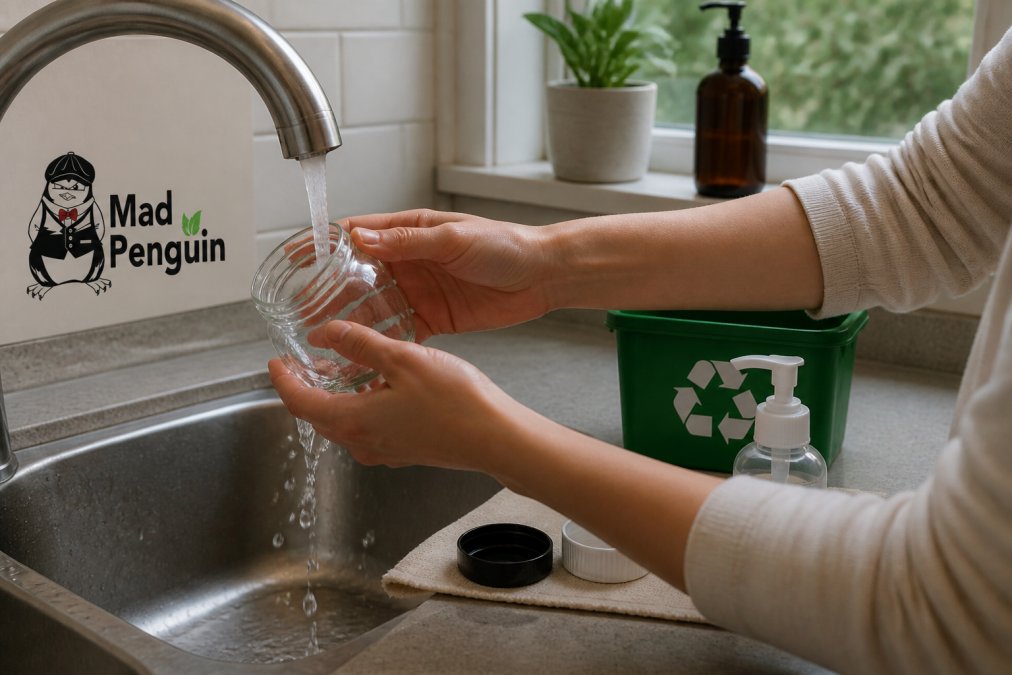
Here's the process that actually works:
- Scrape out remaining product with a spatula and use it up
- Rinse the container with warm water until no residue remains
- Separate components: glass jar, plastic cap, pump mechanism
- Remove and discard pump springs, which are almost never recyclable
- Check your local program's accepted materials before placing anything curbside
The Pump and Dropper Problem
Pumps and droppers are the hardest components to recycle. A typical pump contains a plastic housing, a metal spring, and sometimes a silicone gasket. These materials are fused together and cannot be separated by hand. Most curbside programs reject them entirely. The same goes for droppers with rubber bulbs and glass pipettes. The rubber bulb is not recyclable, and the glass pipette is too small for most sorting facilities to capture.
Multi-Material Components: When to Separate and When to Toss
Multi-material packaging is the enemy of recycling. A tube with a plastic cap, a metal nozzle, and a laminated body is almost impossible to recycle because the layers can't be separated. A jar with a glass body and a plastic lid is easier: separate the two, recycle the glass, and check if the plastic lid is accepted curbside. A bottle with a pump is similar: remove the pump, recycle the bottle, and trash the pump unless the brand has a take-back program.
What to Do When You're Not Sure
When in doubt, throw it out. Putting a non-recyclable item in the recycling bin is worse than putting it in the trash because it can contaminate the entire batch. If you're unsure whether your local program accepts a specific material, check your municipality's website or call your waste hauler. Most have clear guidelines online.
Refillable Skincare Systems: The Circular Economy in Practice
Refillable systems are the strongest lever in the circular economy for skincare. Instead of buying a new bottle every time, you buy a refill pouch or pod and reuse the original container indefinitely.
Building a Zero Waste Skincare Routine That Still Works
A zero waste skincare routine prioritizes refillable, recyclable, or compostable packaging and minimizes single-use plastic at every step. It doesn't require throwing out everything you own.
- Solid bars and balms in paper or aluminum
- Glass bottles with refill pouches
- Products with clearly stated PCR content
- Brands that publish disposal instructions
The Trade-Offs Nobody Mentions: Preservation, Shipping, and Greenwashing
Preservation is the trade-off almost no one talks about. Eco-friendly packaging often means less plastic, thinner barriers, and more air exposure. Some natural formulas need stronger preservation to stay stable, and that can conflict with a minimalist package.
Conclusion
Figuring out which packaging claims are real takes more effort than it should, and the labels rarely help. Mad Penguin Skincare approaches it differently, with natural, non-toxic formulas, clean ingredients free from synthetic chemicals and harsh additives, and responsibly made products built for all skin types. If you want skincare that performs without the environmental guesswork, get started with Mad Penguin Skincare and see the difference transparency makes.
Frequently Asked Questions
What are the most common types of eco-friendly skincare packaging?
The most common options are glass jars and bottles, aluminum containers, post-consumer recycled (PCR) plastic, and cellulose-based polymers made from plant fiber. Glass and aluminum are infinitely recyclable and widely accepted curbside. PCR plastic reduces demand for virgin material. Cellulose-based polymers and other biocontributing materials break down in industrial composting. Each has trade-offs: glass is heavier to ship, aluminum can react with certain formulas, and compostable materials need specific disposal conditions to actually break down.
How can I verify if skincare packaging is actually recyclable?
Check the resin identification code on the bottom of the container. Codes 1 (PET) and 2 (HDPE) are accepted by most curbside programs. Codes 3 through 7 often are not. Look for the How2Recycle label, which gives clear store-drop-off or curbside instructions. Beyond the label, check whether the brand publishes a life cycle assessment or supply chain transparency report. If a brand claims recyclability but offers no disposal instructions, that is a greenwashing signal. Mad Penguin Skincare lists material details on its website so you can check before you buy.
What is the difference between biodegradable and compostable packaging in beauty?
Biodegradable means a material will eventually break down by biological processes, but there is no guaranteed timeline or required end state. Compostable means the material meets a specific standard (like ASTM D6400 in the US) for breaking down into non-toxic components within a defined time frame, usually in an industrial composting facility. A compostable pouch may not break down in your backyard bin. Biodegradable is a broader, less regulated claim, which is why it appears more often in marketing than on certified products.
How does Mad Penguin Skincare approach sustainable packaging?
Mad Penguin Skincare uses eco-friendly and responsibly made packaging designed to reduce environmental waste and pollution. The brand prioritizes clean formulas free from synthetic chemicals, and pairs that with packaging choices that support recyclability and reduced single-use plastic. You can find material and disposal details alongside each product on the website, including options like the California Ocean Mineral Anti-Aging Moisturizer and Night's Best Friend Overnight Repair Cream.
This article contains links to products on the Mad Penguin Skincare website.