

Table of Contents
- Understanding Combination Skin and Its Challenges
- The 4-Step Natural Skincare Routine for Combination Skin
- How to Balance Combination Skin Naturally
- Plant-Based Ingredients That Work for Combination Skin
- Seasonal Adaptation and Internal Factors
- Ingredients to Avoid for Combination Skin
- Frequently Asked Questions
Last Updated: September 27, 2026
Understanding Combination Skin and Its Challenges
Combination skin is frustrating: oily T-zone, dry cheeks. Pick a moisturizer that hydrates your cheeks and your forehead looks like an oil slick. A natural skincare for combination skin routine isn't about finding one miracle product, it's about understanding what's happening on your face and addressing each zone differently.
Combination skin stems from a compromised skin barrier: your T-zone (forehead, nose, chin) overproduces sebum while cheeks and neck stay dehydrated. Sebum overproduction isn't the problem, it's your skin compensating for barrier damage.
A natural skincare for combination skin routine hydrates deeply while balancing sebum production using plant-based, non-comedogenic ingredients.
At Mad Penguin Skincare, we prioritize clean formulas, free from synthetic chemicals and harsh additives, to support healthy, hydrated, and nourished skin naturally.
The 4-Step Natural Skincare Routine for Combination Skin
A solid natural skincare for combination skin routine follows the foundation every dermatologist recommends: cleanse, treat, hydrate, protect.
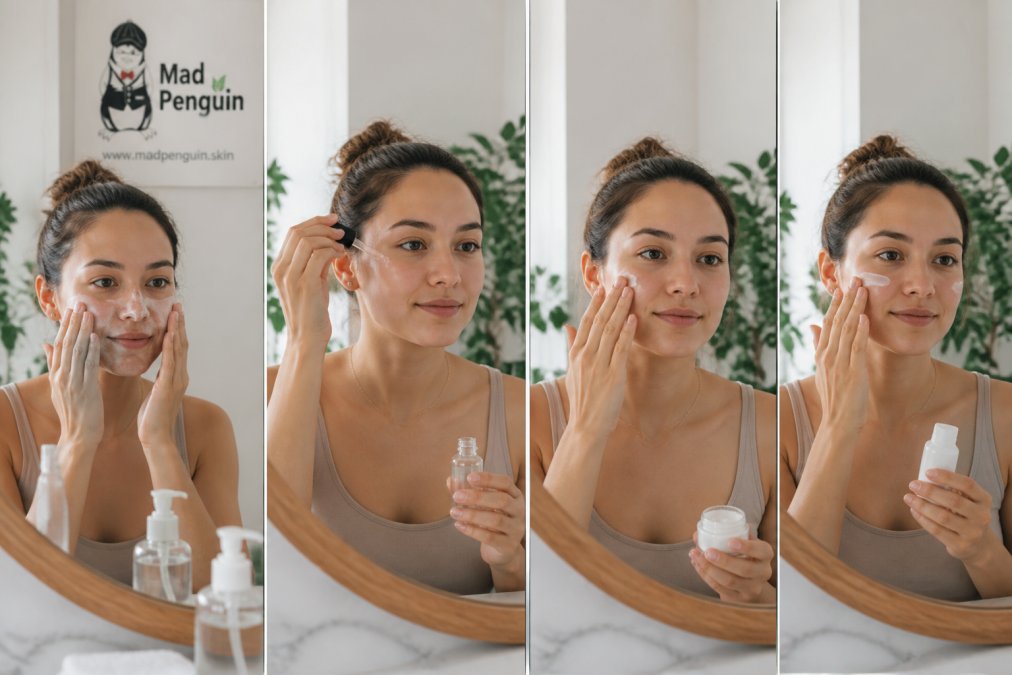
Step 1: Cleanse with a Gentle Natural Face Wash
Use a gentle cleanser that removes impurities without stripping. Double cleansing works well: oil-based cleanser first to dissolve sebum and makeup, then water-based cleanser.
The L.A. Hibiscus natural face scrub gently exfoliates with vitamin C and antioxidants. Massage in circular motions, focusing on your T-zone.

Avoid sulfates and synthetic fragrances, which strip your skin barrier and trigger more sebum production. Your cleanser should feel gentle, not squeaky-clean.
Step 2: Treat with Targeted Serums and Toners
A hydrating toner rebalances pH and preps skin for heavier products. Use witch hazel or hydrosols to control oil while hydrating. Antioxidant serums with plant extracts protect your barrier and reduce inflammation. Apply toner with a cotton pad, then serum, before moisturizing.
Step 3: Hydrate with Natural Moisturizer for Combination Skin
Use a lightweight, non-comedogenic moisturizer. The California Ocean Mineral Anti-Aging Moisturizer deeply hydrates with ocean minerals that replenish your barrier. Apply to damp skin, using less on your T-zone and more on cheeks and neck.
Step 4: Protect with Sunscreen and Nourishing Oils
Use mineral sunscreen (zinc oxide or titanium dioxide) daily, UV damage worsens combination skin by breaking down your barrier.
At night, add a nourishing oil after your moisturizer. Plant oils like jojoba, rosehip, or argan can help regulate sebum production. Use just 2-3 drops on damp skin.
How to Balance Combination Skin Naturally
Balancing combination skin comes down to supporting your skin barrier and understanding how natural ingredients interact. When your barrier is healthy, sebum production normalizes and dehydration improves.
The Barrier-First Approach
Your skin barrier is a lipid layer holding moisture in and irritants out. When compromised, oily zones overproduce sebum while dry zones lose hydration. Focus on gentle cleansing, humectant hydration, and occlusive protection instead of harsh actives.
Avoid harsh cleansers with sulfates, astringent toners with high alcohol, and silicone-based moisturizers. Prioritize:
- Gentle cleansing without sulfates or synthetic fragrances
- Hydration with humectants (hyaluronic acid, glycerin, aloe vera) that don't add heaviness
- Light occlusive protection (plant oils like jojoba, rosehip) that seal hydration without clogging pores
- UV protection daily to prevent further barrier damage
Ingredient Synergy: What Works Together (and What Doesn't)
Understanding ingredient synergy prevents irritation and maximizes results.
Niacinamide + Plant Oils: Niacinamide regulates sebum and strengthens your barrier. Paired with jojoba oil, it signals your skin to reduce excess sebum, particularly effective for oily T-zones.
Hyaluronic Acid + Botanical Extracts: Hyaluronic acid pulls moisture in; pair with antioxidant extracts (green tea, rosehip, chamomile) that reduce inflammation and improve barrier function. Apply toner first, then serum.
Witch Hazel + Humectants: Witch hazel controls oil but can feel drying alone. Pairing it with a hydrating toner or serum containing humectants prevents over-drying and keeps your barrier intact.
Avoid: High-concentration essential oils with niacinamide (can trigger sensitivity), benzoyl peroxide with plant oils (oils can trap bacteria), and salicylic acid with barrier-repair ingredients like ceramides (the acid disrupts repair).
Budget-Friendly DIY Natural Alternatives
You don't need expensive products to support your barrier. Several evidence-based DIY options work for combination skin.
Hydrating Toner (DIY): Mix 1 part glycerin, 3 parts rose hydrosol or alcohol-free witch hazel, 1 part aloe vera gel. Apply with cotton pad after cleansing.
Gentle Exfoliating Mask (DIY): Mix 2 tablespoons honey, 1 tablespoon oatmeal, 1 teaspoon lemon juice. Apply for 10-15 minutes, 1-2 times weekly.
Lightweight Facial Oil Blend (DIY): Mix equal parts jojoba and rosehip oil, add 2-3 drops chamomile essential oil. Use 2-3 drops on damp skin at night.
Important: DIY formulations lack preservatives, so make small batches and use within 2-3 weeks. Store in dark glass bottles away from direct sunlight. Patch-test first if you have sensitive skin or active breakouts.
Consistency and Timeline
Use the same routine for 4 weeks before judging results. Consistency is key for seeing improvement in oil-balancing and hydration.
Track oiliness, dryness, and breakouts daily. Tracking oiliness, dryness, and breakouts daily can help you understand your skin's progress.
Internal Factors: The Often-Overlooked Half
Topical products alone won't balance combination skin without addressing internal factors: hormonal fluctuations, stress, dehydration, and poor diet all trigger sebum overproduction.
Hormonal cycles: Sebum production peaks 3-5 days before your period. Increase gentle cleansing and reduce heavy moisturizers on your T-zone during this phase.
Stress and sleep: Cortisol triggers sebum overproduction and impairs barrier function.
Hydration: Drink at least 8 glasses of water daily.
Plant-Based Ingredients That Work for Combination Skin
Hibiscus is rich in vitamin C and antioxidants, gently exfoliating without irritation. The L.A. Hibiscus natural face scrub improves texture and glow.
Seasonal Adaptation and Internal Factors
Your combination skin shifts with temperature, humidity, daylight exposure, and hormonal cycles. A routine that works perfectly in spring may fail in winter without adjustment.
Seasonal Adjustments: Why Your Routine Needs to Change
Winter (November-February): Low humidity accelerates water loss. Your dry zones become drier while your T-zone produces more sebum to compensate.
Winter adjustments:
- Switch to a richer moisturizer or add facial oil. The Night’s Best Friend Overnight Repair Cream is designed to support that natural process with a powerful blend of botanical oils, vitamins, and ocean-inspired ingredients that deeply hydrate and nourish the skin overnight.
- Cleanse once daily (at night).
- Apply hydrating toner twice daily.
- Use 3-4 drops jojoba or rosehip oil at night on damp skin.
- Use lukewarm water instead of hot showers.
Spring adjustments:

- Switch to lightweight lotions or gel moisturizers.
- Reduce facial oil to 2-3 drops or skip on T-zone.
- Use mineral sunscreen daily.
- Exfoliate 1-2 times weekly.
Summer adjustments:
- Use lightweight water-based moisturizer or skip on T-zone.
- Cleanse twice daily if sweating heavily.
- Use witch hazel toner to control oil.
- Skip facial oils or use 1 drop on dry areas at night.
- Reapply sunscreen every 2 hours outdoors.
- Use lightweight clay mask 1-2 times weekly.
Fall adjustments:
- Gradually increase moisturizer richness.
- Add facial oil back to nighttime routine.
- Reduce exfoliation frequency.
- Maintain sun protection.
Hormonal Cycles and Sebum Production
If you menstruate, your combination skin follows a predictable monthly pattern tied to progesterone and estrogen fluctuations.
Luteal phase adjustments:
- Cleanse twice daily with gentle cleanser.
- Use hydrating toner to prevent over-drying.
- Use lightweight gel on T-zone instead of heavy moisturizer.
- Add spot treatment with witch hazel if breakouts occur.
- Avoid new products, your skin is more reactive.
Diet, Hydration, and Stress: The Internal Triggers
Dehydration: Drink at least 8 glasses of water daily.
High-glycemic foods: High-glycemic foods spike insulin and trigger sebum production. Try eliminating them for 2-3 weeks if your skin worsens.
Tracking Seasonal and Internal Patterns
Keep a simple skin log for 2-3 months noting oiliness, dryness, breakouts, season, sleep, stress, diet, and cycle phase (if applicable).
Ingredients to Avoid for Combination Skin
Some ingredients make combination skin worse. Synthetic fragrances trigger inflammation and irritate your skin barrier, one of the most common causes of combination skin worsening.
Frequently Asked Questions
What is the best natural skincare routine for combination skin?
A balanced routine for combination skin follows four steps: cleanse with a gentle, non-comedogenic face wash; treat with lightweight serums containing antioxidants and hydrating toners; moisturize with a lightweight formula that hydrates without adding excess oil; and protect with sunscreen. The key is using products that address both oily T-zone and dry areas without over-treating either zone. Mad Penguin Skincare's Hydrating Skin Starter Kit provides cleansing and moisturizing essentials specifically formulated for all skin types, including combination skin.
How do I treat an oily T-zone while hydrating dry cheeks naturally?
Use a gentle cleanser twice daily to remove excess sebum without stripping the skin barrier. Apply hydrating toner and lightweight serums to your entire face, then use a richer moisturizer only on dry areas like cheeks. For the T-zone, consider a mattifying natural toner with witch hazel or hydrosols. Exfoliate gently 1-2 times weekly to prevent pore congestion in oily zones. The L.A. Hibiscus natural face scrub removes dead skin cells while its antioxidant-rich formula supports balanced skin texture across both oily and dry areas.
Which natural ingredients are best for balancing combination skin?
Look for plant-based ingredients like hyaluronic acid for hydration, witch hazel for oil control, botanical extracts such as hibiscus and green tea for antioxidant protection, and emollients like jojoba oil that won't clog pores. Hydrosols and hydrating toners help rebalance the skin barrier without excess oil. Avoid synthetic fragrances and heavy silicones. Mad Penguin Skincare's products use natural botanical ingredients designed to work synergistically, supporting healthy sebum production while maintaining the lipid barrier and preventing trans-epidermal water loss.
What ingredients should I avoid if I have combination skin?
Avoid heavy oils, silicones, synthetic fragrances, sulfates, and alcohol-based products that can irritate or over-dry skin. Skip overly occlusive moisturizers that trap oil in the T-zone and products with harsh exfoliants that damage the skin barrier. Steer clear of fragrance-heavy formulations and products with unnecessary chemical additives. Choose dermatologist-tested, non-comedogenic products instead. Mad Penguin Skincare formulations are free from synthetic chemicals and harsh additives, making them ideal for sensitive combination skin prone to irritation.
Combination skin doesn't have to be complicated. The real challenge is finding products that actually work, products that hydrate without clogging, control oil without stripping, and support your skin barrier instead of damaging it. Mad Penguin Skincare's natural formulations are built for exactly this. Explore the Hydrating Skin Starter Kit to start a natural skincare for combination skin routine that actually delivers results.
