

Table of Contents
- What Greenwashing Means in the Beauty Industry
- Common Examples of Greenwashing in Cosmetics
- Unregulated Buzzwords and Misleading Marketing Claims
- Red Flags in Packaging and Labeling
- The Role of Third-Party Certifications and Verification
- How to Build a Sustainable Skincare Routine
- Sustainable Skincare Certification Guide
- Frequently Asked Questions
Last Updated: September 18, 2026
What Greenwashing Means in the Beauty Industry
Greenwashing in skincare is when a brand makes environmental or health claims that sound good but aren't backed by real practices or certifications, and recognizing signs of greenwashing in skincare brands is essential for conscious consumers. It's marketing theater designed to appeal to eco-conscious shoppers without actually delivering on the promise.
The beauty industry is full of it. Brands slap "natural," "eco-friendly," and "clean" on bottles without changing much about how they operate. The result: confused consumers who think they're making sustainable choices when they're not.
At Mad Penguin Skincare, we believe transparency matters. Real sustainability requires honest ingredient sourcing, actual certifications, and packaging that reduces waste. That's the standard we hold ourselves to, and the standard you should expect from any brand claiming to care about the environment.
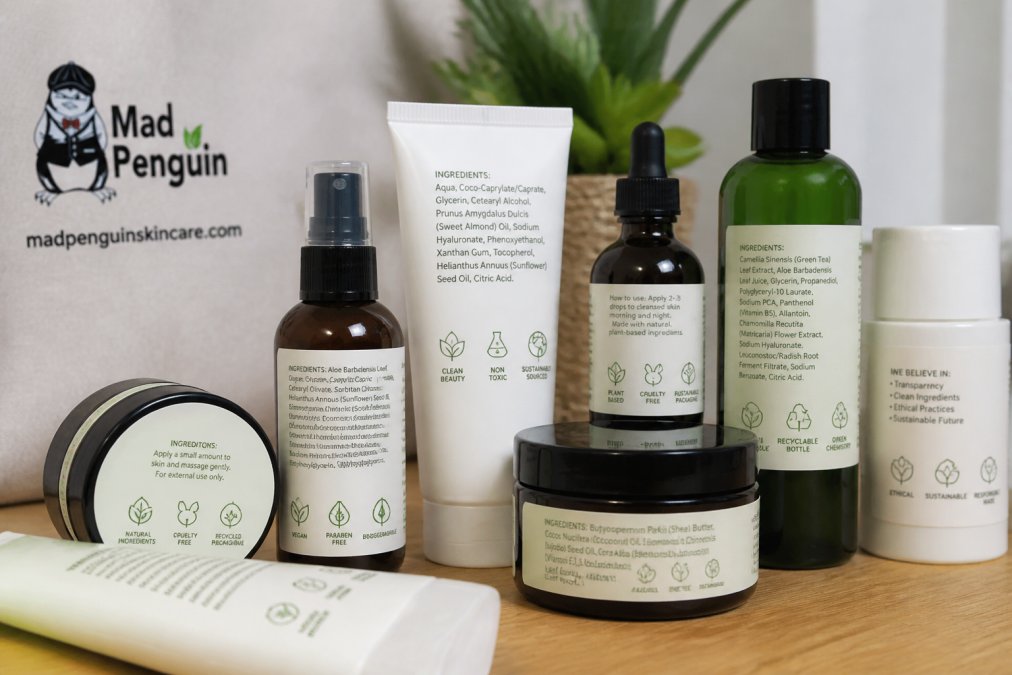
Common Examples of Greenwashing in Cosmetics
Greenwashing shows up in predictable ways. A brand might highlight one "natural" ingredient while hiding dozens of synthetic chemicals. Another might use earth-tone packaging and call itself "eco-conscious" without changing a single manufacturing practice.
Here are the most common tactics:
- "Natural" everything claims, The word "natural" has no legal definition in cosmetics. A product can be 1% natural and still claim it.
- Vague sustainability language, "Eco-friendly," "green," "clean," and "sustainable" sound nice but often mean nothing specific.
- Hidden synthetic ingredients, Brands highlight rose oil or vitamin C while burying synthetic preservatives and fragrance compounds in the fine print.
- Misleading certifications, Fake or obscure logos that look official but carry no real third-party verification.
- Minimal packaging changes, Using slightly less plastic or lighter-colored bottles while calling it an "environmental commitment."
The problem is simple: consumers can't easily verify these claims. A brand can say anything and hope nobody digs deeper. That's where red flags come in.
Unregulated Buzzwords and Misleading Marketing Claims
Greenwashing thrives in regulatory gaps. The beauty industry is governed by the FDA, but the agency's oversight of cosmetic claims is limited compared to pharmaceuticals. This creates space for brands to make vague, unverifiable claims without legal consequence.
The Regulatory Landscape
Under the Federal Food, Drug, and Cosmetic Act, cosmetics are defined as products intended to cleanse, beautify, or alter appearance, not to treat or cure disease (the FDA). This distinction matters: cosmetics face minimal pre-market approval requirements, while drugs require FDA review before sale.
The result: a brand can make almost any environmental or safety claim about a cosmetic without submitting evidence to the FDA first. The agency can only act after a false claim is made and reported. This is reactive enforcement, not preventive.
Buzzwords That Exploit This Gap
"Clean beauty" is perhaps the worst offender. There's no official definition in FDA guidance or any other regulatory body. One brand's "clean" formula might contain ingredients another brand avoids entirely. The term has become a marketing tool rather than a meaningful standard.
"Non-toxic" is equally vague and scientifically misleading. Everything is toxic at some dose, water included. The term implies danger where none may exist and safety where it's unproven. Brands use it to suggest their competitors are "toxic," which is both misleading and unfair. The FDA does not regulate the term "non-toxic" in cosmetics, so brands can claim it without evidence.
"Dermatologist-tested" sounds rigorous. In reality, it often means a dermatologist tried it once and didn't report a reaction.
Red Flags in Packaging and Labeling
Packaging and formulation are two separate sustainability questions, and greenwashing exploits the confusion between them. A brand can have perfect packaging and a problematic formula, or vice versa. Learning to separate these tells you whether a brand's claims are real.
Packaging Sustainability vs. Formulation Sustainability
Packaging sustainability asks: Is the container recyclable, refillable, or made from recycled content? This is visible and easy to market.
Formulation sustainability asks: Are the ingredients biodegradable? Are they sourced ethically? Do they break down in waterways without harming aquatic life? This is invisible and harder to verify.
Greenwashing brands excel at the first and ignore the second. A skincare product in a beautiful glass jar (recyclable packaging) might contain microplastics that never biodegrade and synthetic ingredients sourced from suppliers with poor labor practices. The packaging looks sustainable; the formula isn't.
Conversely, a brand might use minimal plastic packaging but formulate with genuinely biodegradable, ethically sourced ingredients. The packaging is less impressive, but the environmental impact is lower.
What to look for in packaging:
- Recycled content percentage, Legitimate brands state how much post-consumer recycled material is in the container. "Recyclable" means it can be recycled; "made from recycled content" means it was. These are not the same.
- Refill programs, Brands offering refillable containers or bulk options reduce packaging waste per use. This is a concrete sustainability commitment, not a marketing claim.
- Material transparency, Glass, aluminum, and steel are infinitely recyclable. Plastic #1 and #2 are widely accepted in curbside programs. Plastic #5 and #7 are rarely recycled. Brands should specify which they use.
- Minimalist design, Excessive packaging, decorative boxes, and plastic windows inflate waste. Simpler packaging reduces material use and shipping weight.
What to look for in formulation:
- Biodegradability claims backed by testing, Legitimate brands cite third-party biodegradability testing (OECD standards). Vague claims like "naturally derived" don't mean biodegradable.
- Ingredient sourcing transparency, Can the brand trace where each ingredient comes from? Fair Trade or similar certifications for botanical ingredients indicate ethical sourcing. At Mad Penguin Skincare, we prioritize suppliers with documented labor practices and environmental stewardship.
- Absence of microplastics, Microbeads and microplastics in rinse-off products end up in waterways. The FDA banned intentional microbeads in 2015. Check ingredient lists for polyethylene, polypropylene, and polymethyl methacrylate (PMMA).
- Water-soluble vs. film-forming ingredients, Some synthetic ingredients form a plastic-like film on skin and don't rinse away cleanly. Silicones (dimethicone) and acrylates are common offenders. Water-soluble alternatives biodegrade more readily.
Red Flags in Labeling
- Vague ingredient descriptions, "Botanical complex" or "natural fragrance blend" hides what's actually inside. Real transparency lists every ingredient by name and concentration.
- Missing ingredient percentages, Brands aren't required to list how much of each ingredient is in the formula. Greenwashers exploit this by highlighting trace amounts of expensive natural ingredients while using cheap synthetics for the bulk.
- Fake eco-credentials, Logos that look official but aren't verified by any third party. Real certifications come from organizations like the USDA or independent bodies, not the brand itself.
- "Greenwashing through color," Green packaging, earth tones, and nature imagery create an eco-friendly feeling without changing the product inside.
- Tiny ingredient lists, If a skincare product lists fewer than 10 ingredients, something's missing. Real formulas are complex. Suspiciously simple lists often hide the truth through loopholes.
The best brands, like Mad Penguin Skincare, make both packaging and formulation choices transparent. Visit our website to see how we source ingredients and design packaging. If a brand can't explain both, that's a red flag.
The Role of Third-Party Certifications and Verification
This is where greenwashing stops. Real third-party certifications require independent verification and ongoing compliance.
Legitimate certifications include:
- USDA Organic, Verifies that 95% of ingredients are certified organic and meet strict standards. This is a real, enforceable certification.
- Fair Trade Certified, Ensures ethical sourcing and fair wages for farmers and workers. Independent audits verify compliance.
- Leaping Bunny, The gold standard for cruelty-free verification. Brands submit to unannounced audits and traceability checks.
- EWG Verified, The Environmental Working Group reviews ingredient safety and transparency. Brands must meet strict criteria and allow ongoing monitoring.
- B Corp Certification, Verifies that a company meets high social and environmental standards, with independent assessment and public accountability.
Understanding the signs of greenwashing in skincare brands helps you identify why greenwashing brands avoid real certifications, because they're expensive and require actual change. If a brand can't point to at least one credible third-party certification, ask why.
The brands worth trusting don't just claim sustainability, they prove it through verifiable, independent verification.
How to Build a Sustainable Skincare Routine
Building a sustainable routine means making intentional choices at every step. Start by auditing what you already use.
Step 1: Know your ingredients
Read every label. Look for products with short, recognizable ingredient lists. Avoid formulas with synthetic fragrances, parabens, and silicones unless you have a specific reason to use them. Natural doesn't always mean better, but transparency always matters.
Step 2: Choose brands with real certifications
Look for third-party verification.
Step 3: Consolidate your routine
Step 4: Buy refillable or minimal packaging
Step 5: Invest in quality over quantity
Sustainable Skincare Certification Guide
Not all certifications are equal. Here's how to evaluate them.
Organic Certifications
Environmental Impact Certifications
Ingredient Safety Certifications
Supply Chain Certifications
What to Ignore
Frequently Asked Questions
What are the most common signs of greenwashing in skincare?
The most common signs include vague terms like 'natural' and 'eco-friendly' without explanation, green packaging that suggests sustainability without addressing the actual formula, missing third-party certifications, and claims about carbon footprint reduction without evidence. Many brands use imagery of nature or sustainability language in marketing while their supply chain lacks transparency. Checking the ingredient label against marketing claims often reveals the disconnect between what a brand promises and what it actually delivers.
How can I verify if a skincare brand is actually sustainable?
Look for specific, measurable commitments rather than vague statements. Truly sustainable brands disclose their supply chain, list certifications from recognized bodies, and explain their manufacturing processes. Check their website for detailed sustainability reports and ingredient sourcing information. Brands like Mad Penguin Skincare provide transparency about their formulations and sourcing practices. Request third-party testing documentation if available, and cross-reference any environmental claims with independent certification databases.
Are terms like 'natural,' 'clean,' and 'eco-friendly' actually regulated?
No. The Federal Trade Commission oversees general advertising claims, but 'natural,' 'clean,' and 'eco-friendly' lack legal definitions in skincare. This means brands can use these terms freely without proving them. The FDA regulates cosmetic ingredients but does not enforce the marketing language used on labels. This regulatory gap is why greenwashing thrives in the beauty industry. Always look beyond the label language to actual certifications, ingredient transparency, and third-party verification to understand what a brand truly offers.
What certifications should I look for to avoid greenwashing?
Credible certifications include USDA Organic (for organic ingredients), Leaping Bunny (cruelty-free), B Corp (social and environmental performance standards), and Green Seal (environmental responsibility). However, certifications cost money, so smaller brands may not have them despite being genuinely sustainable. Cross-check certifications on official databases and look for brands that explain their certification choices. Transparency about why a brand did or did not pursue specific certifications is itself a sign of honesty.